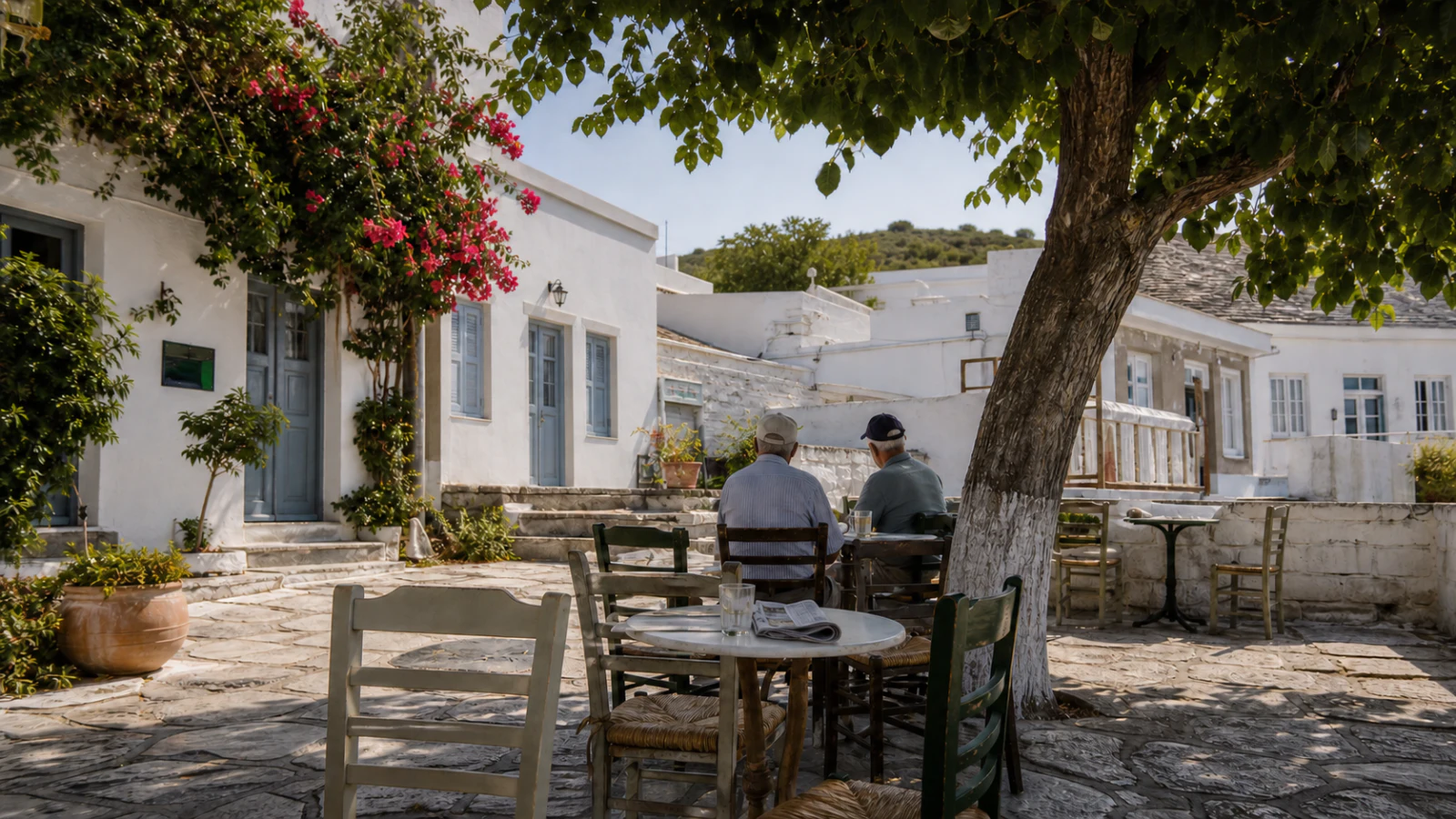
Stay in Parikia for the easiest first visit, Naoussa for dinners and evenings, the east or south for a beach-first week, and inland only when quiet matters more than walking to the sea.
Paros is compact enough to tempt you into choosing a villa by the photograph alone. Naoussa looks lovely, the east has long beaches, and almost everywhere appears to be a short drive from somewhere else.
The catch is that a short drive is still a drive when you only wanted to walk out for dinner. The north, west, east and south also give you different beach choices when the summer wind gets up. The best base is the one that suits most of your ordinary days, not the one closest to every sight on a list.
Decide what matters most: a town, a harbour village, a beach-first week or inland quiet. On Paros, “near Naoussa” can mean an easy evening or a dark roadside walk that is not a walk at all. Check the exact pin in our Paros collection.
Which Part of Paros Should You Stay In?
Base — Best For — What You Gain — The Compromise
Parikia — First visits and car-light holidays — The main port, bus hub, old town and everyday shops — Ferry traffic and a less polished first impression
Naoussa — Couples and groups who care about dinner and evenings — The island's strongest concentration of restaurants and harbour atmosphere — Crowds, higher prices and parking pressure in high season
Piso Livadi, Logaras and Golden Beach — Families, swimmers and watersports — East-coast beaches and small-harbour days — Quieter evenings and more exposure when the wind favours the east
Aliki and the south — Young families and a slower week — A small fishing-village rhythm and nearby beaches — Limited nightlife and a car for wider exploring
Pounda and the west — Antiparos trips and sunset-facing stays — Easy access to the Antiparos crossing and west-coast beaches — Less of a single village centre outside Parikia
Lefkes, Prodromos and Marpissa — Couples and groups wanting village life — Cooler-feeling evenings inland, walking routes and a quieter setting — No beach on the doorstep and thinner late transport
Parikia for an Easy First Visit
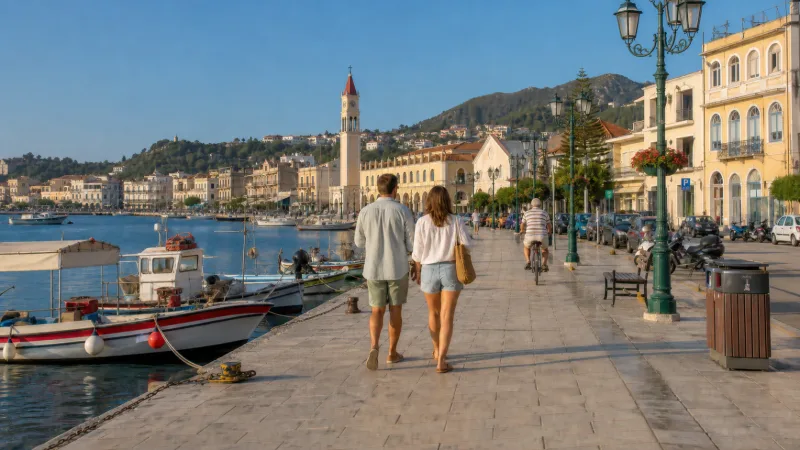
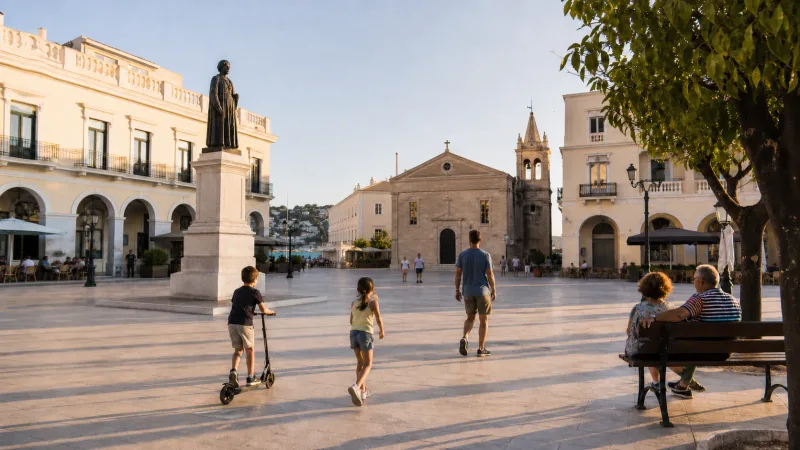
Parikia is the practical answer, which is not the same as the dull answer. The ferries arrive here, the bus routes radiate from here, and behind the waterfront there is an old town of narrow lanes, white houses and the church of Panagia Ekatontapiliani.
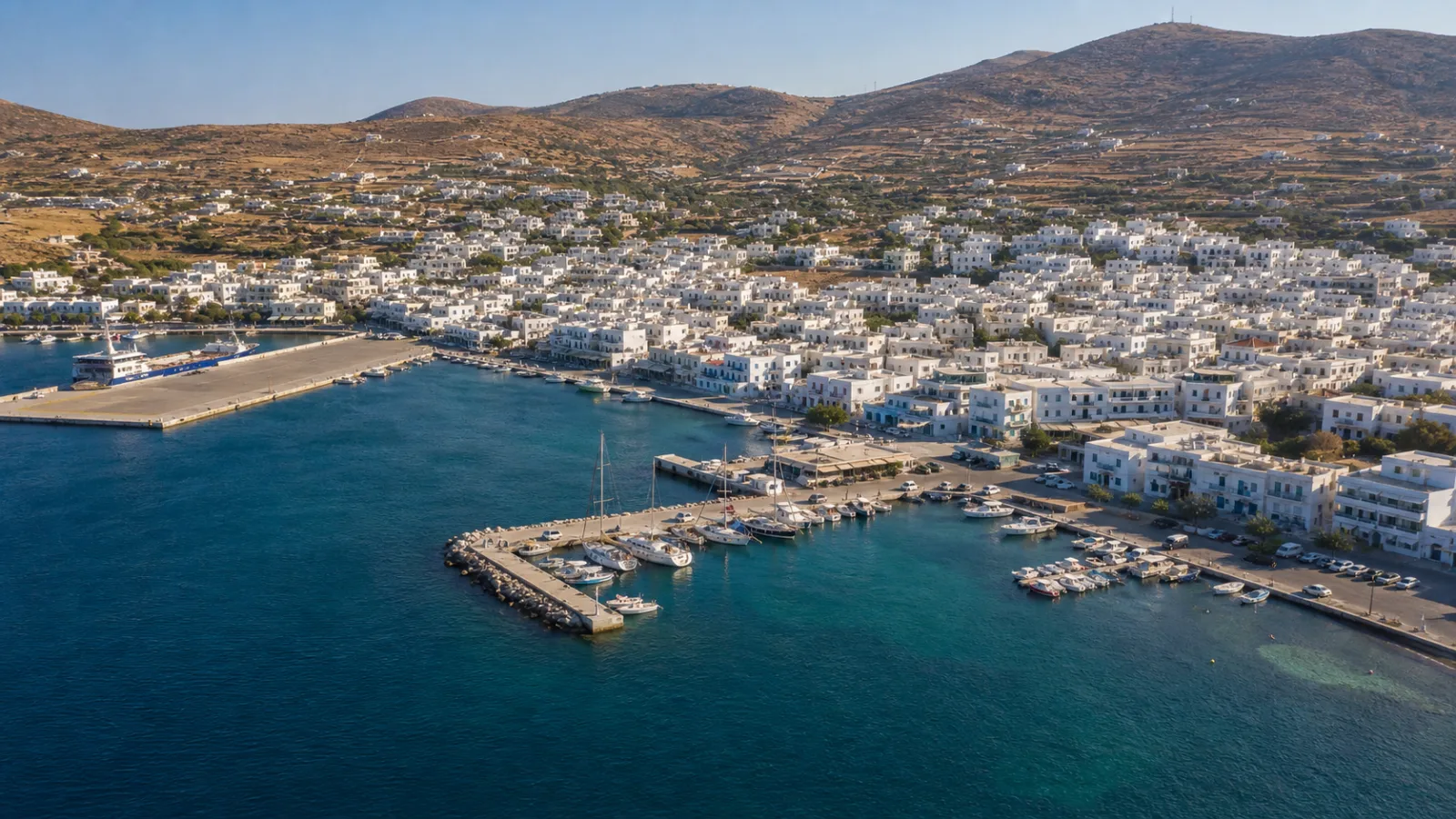
For a first visit without a car, it makes the island much easier. You can get to Naoussa and several villages and beaches by bus, then come back to somewhere with shops and dinner choices. The official timetable changes through the season, so check the version covering your actual dates rather than relying on an old screenshot.
Livadia beach is north of the port and useful for a simple swim. It is not the reason to choose Parikia. Choose it because you want to step off the ferry, settle quickly and have the island's transport at hand.
The port is also the drawback. Large ferries come and go, traffic gathers around arrivals, and the waterfront can feel functional before it feels charming. A villa on the quieter edge of Parikia may solve the noise but lose the walkability, so the final pin matters.
Parikia works best for a short first trip, a car-light couple or a family that values easy logistics more than having the prettiest harbour outside the door.
Naoussa for Dinner and Late Evenings
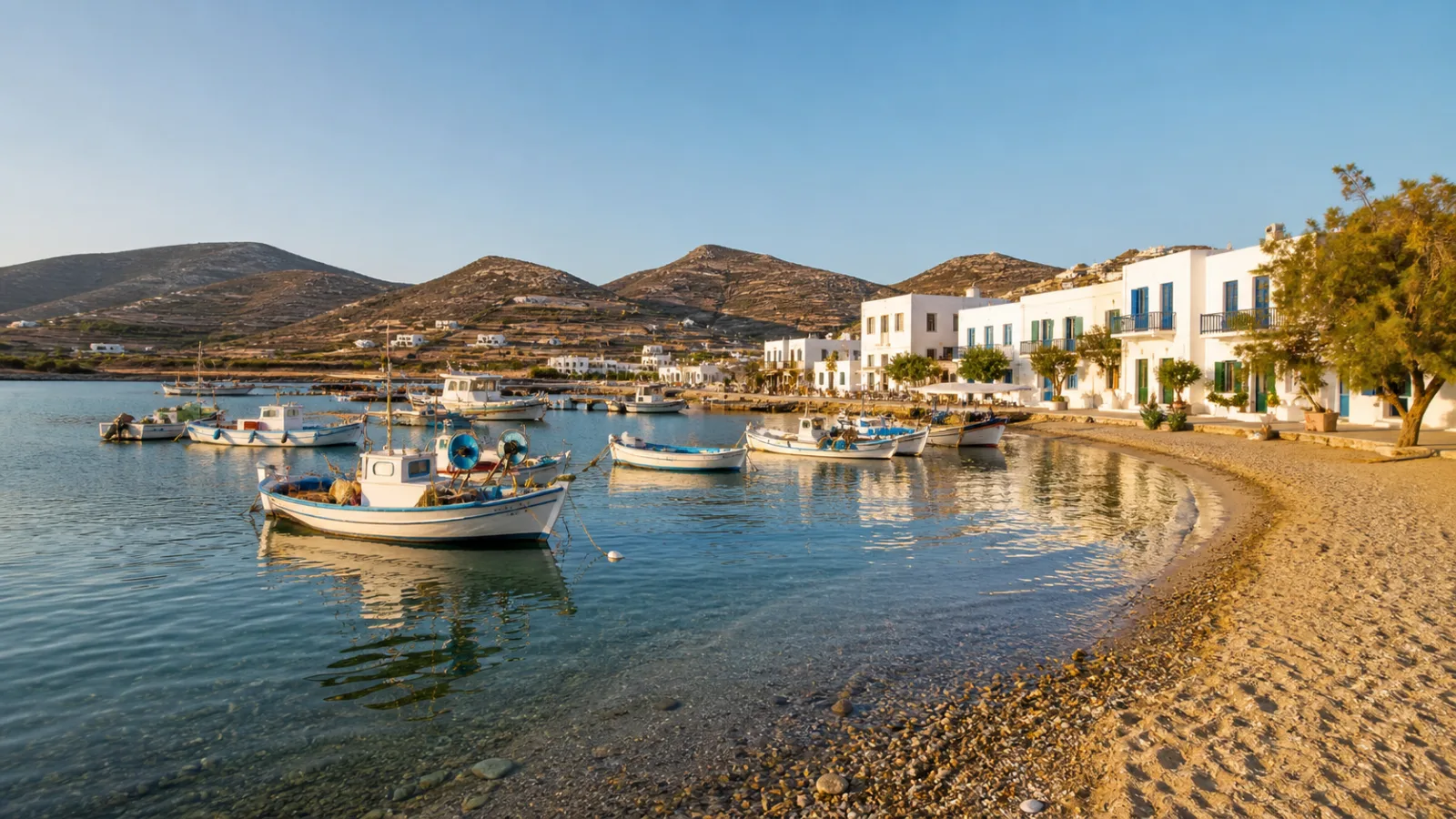
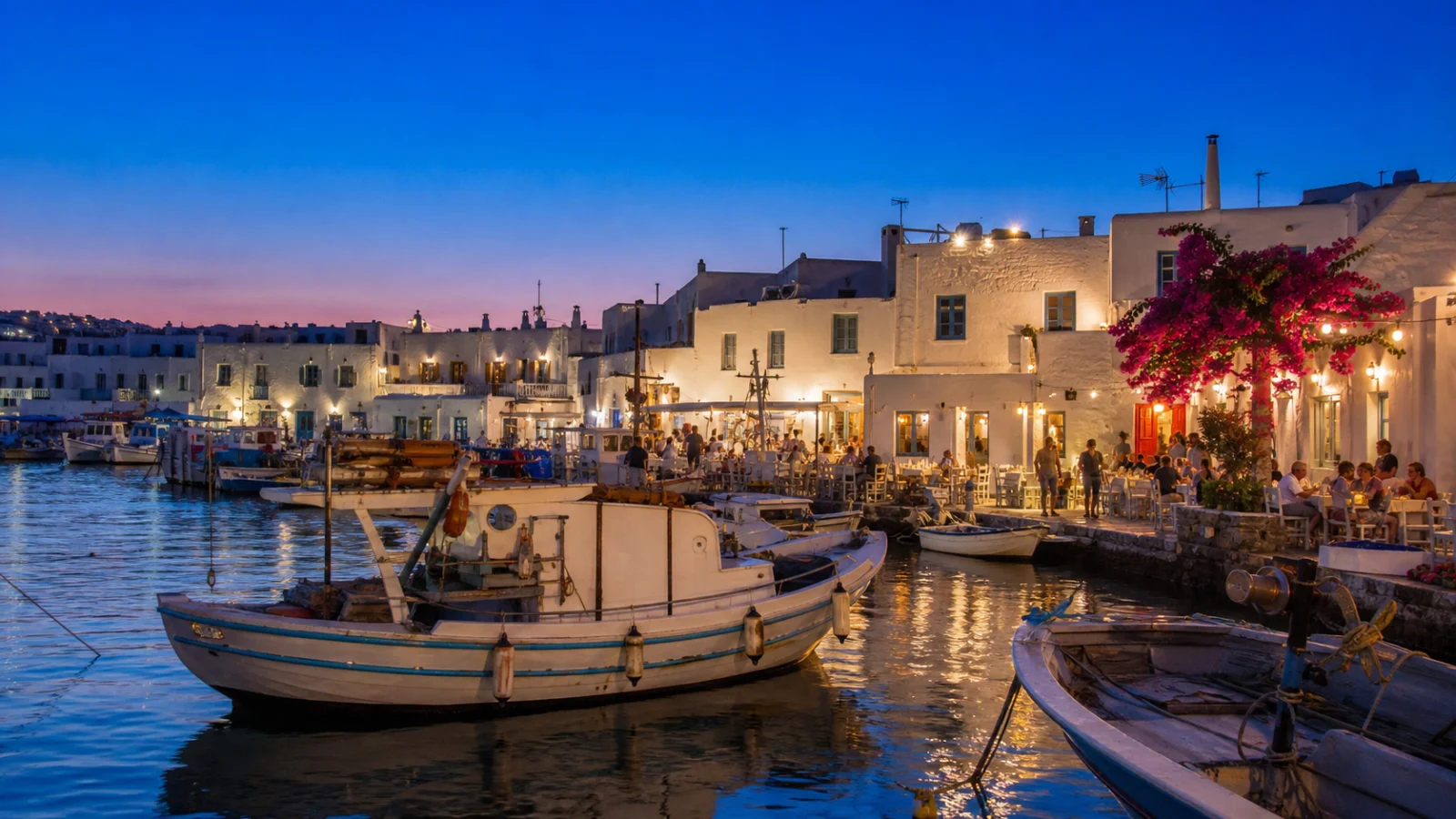
Naoussa is the base people picture when they picture Paros: fishing boats in the old harbour, white lanes behind the water and tables filling up as the sun drops. If dinner and the walk afterwards are part of the holiday, this is the easiest place to choose.
It suits couples and groups particularly well. You have far more evening choice than in the beach villages, and you do not need to appoint a driver every time you want to stay out. That convenience is exactly why Naoussa is busy and expensive in high season.
The words “Naoussa area” cover more ground than the harbour. Kolymbithres sits across the bay, Santa Maria is farther north-east, and villas on the roads around Ampelas or the hills may be firmly car-dependent. A property can have a Naoussa view without offering a sensible walk into town.
Nearby beaches give you variety, but the north can take the summer wind. Kolymbithres is a group of coves between smooth granite shapes rather than one endless beach. Monastiri sits within the environmental park farther around the bay. Santa Maria has a more open, activity-led feel. None should be treated as guaranteed shelter; check the forecast and choose the bay that suits the day.
Stay in Naoussa for the evenings and the village itself. If the whole holiday is about an easy sandy beach every morning, look east or south before paying for the harbour address.
Piso Livadi, Logaras and Golden Beach for a Beach-First Week
Logaras is on the east coast, close to Piso Livadi and within the same practical beach conversation as Punda Beach and Golden Beach. It is not part of the south-west coast, however neatly the places can appear grouped on a booking map.
Piso Livadi is the village choice. It has a small harbour, places to eat by the water and a scale that feels manageable after a day out. Logaras is close by and more beach-led. Golden Beach, or Chrissi Akti, opens into a much longer sweep of sand farther south.
Golden Beach is also a watersports base. The wind that gives experienced windsurfers a good afternoon may not give a toddler the beach day you imagined. Conditions vary, and mornings can feel different from later in the day. The sensible plan is not to label the whole east coast windy or calm. It is to have another beach in mind and use the daily forecast.
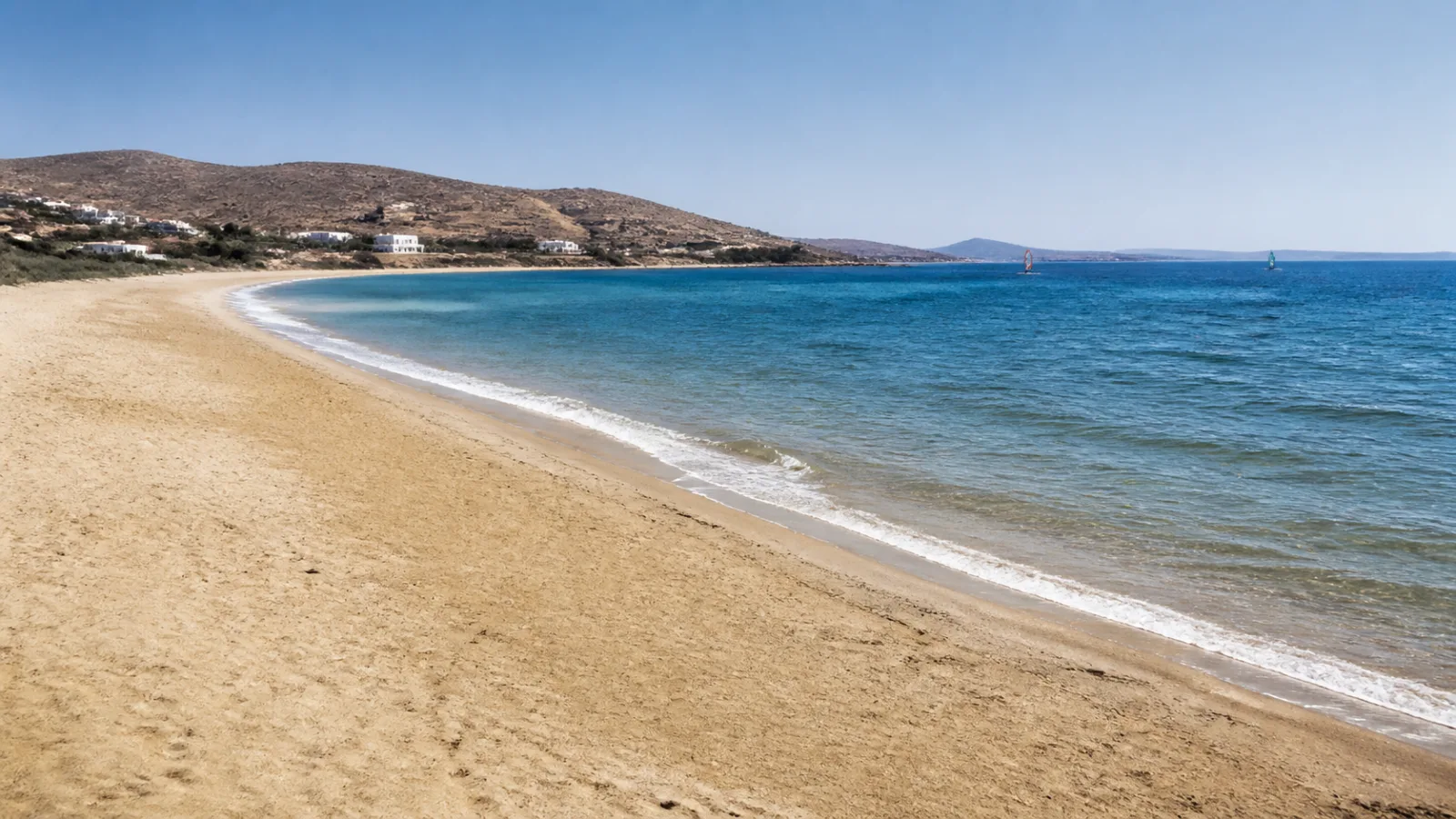
This coast is strong for families who want sand near home, swimmers who do not need a town every night, and groups with somebody keen on windsurfing or paddleboarding. It is weaker for people who expect to walk into Naoussa after dinner.
Piso Livadi is the compromise pick: enough village life for an evening, with several beaches close enough to choose according to conditions.
Aliki and the South for a Quieter Family Rhythm
Aliki is a small fishing village on the south coast. Boats sit in the harbour, the settlement stays low around the water, and a beach day does not need much organising. It is the sort of base where a family can repeat the same pleasant routine without feeling it has missed the point of Paros.
There are tavernas and everyday essentials, but not the depth of evening choice found in Naoussa or Parikia. That is either the drawback or the reason to come.
The airport is in the south of the island, so the area is convenient for arrivals. Do not turn that into a blanket promise about noise or transfer minutes; check the individual property and route. Villas outside the village can still be on unlit local roads.
Choose Aliki for young children, a quieter couple or a group that expects to eat at the villa more often than in town. If half the party wants cocktails and shops every night, the repeated drive north will become the story of the week.
Pounda and the West for Antiparos Days
Pounda on the west coast is the departure point for the short vehicle ferry to Antiparos. That makes this side of Paros useful for travellers who want to move between the two islands or spend more than one day exploring Antiparos.
The west also includes beaches and villa areas south of Parikia, such as Parasporos and Agia Irini. These are not one continuous resort. Some properties sit close to a beach or taverna; others are private hillside stays where every outing begins in the car.
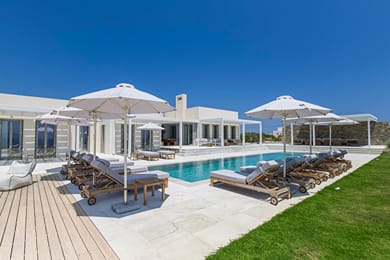
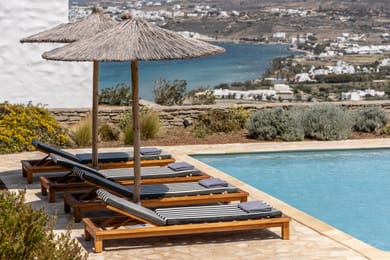
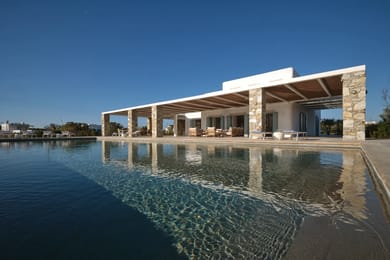
This side suits independent couples and groups who want a pool, west-facing evenings and the freedom to roam. It is less convincing for somebody expecting a walkable village unless the exact address is in or close to Parikia.
Check which “Pounda” a listing means. Paros also has Punda Beach on the east coast, and the similar names are a reliable way to book the wrong side of the island.
Lefkes, Prodromos and Marpissa for Inland Quiet
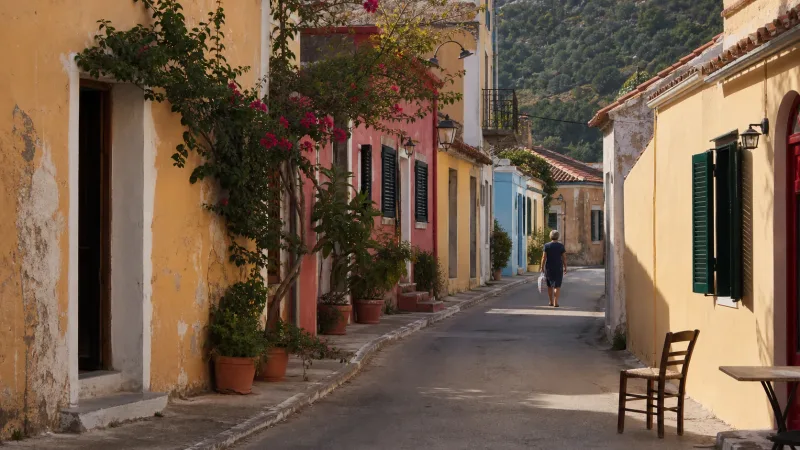
Lefkes is inland and elevated, with marble lanes and views across the island. The old Byzantine path runs from here towards Prodromos, giving the area a different purpose from the coast. You stay for village mornings, walks and a quieter villa, then drive to the beach.
Prodromos and Marpissa offer the same broad trade in different proportions: less waterfront tourism, more village fabric, and no pretence that the sea is outside the gate. For couples and groups with a pool, that can be a much better week than paying for a famous coastal label.
The compromise is transport after dinner. Buses serve the inland villages, but evening frequency changes with the seasonal timetable. If you want to eat late in Naoussa, make a deliberate transport plan rather than hoping the last bus matches an old blog post.
Stay inland if quiet is the point. Do not stay inland and spend every day wishing the children could walk to the beach.
How Much Does the Meltemi Matter?
It matters, but not in the tidy way travel articles sometimes suggest. The meltemi is a summer northerly wind. Its strength changes, and headlands, bays and the time of day can make two nearby beaches feel different.
The old draft divided Paros into a rough, windy side and a reliably calm side. That was too confident. North- and east-facing beaches may be more exposed on some days, and the east is popular with windsurfers for a reason, but no compass direction guarantees the water you will find.
A better plan is simple. Check the wind forecast each morning, ask which nearby bay suits that direction and choose a base with more than one realistic beach. If you book beside a watersports beach, remember that the weather behind the sport is part of the bargain.
That is local usefulness without pretending anyone can promise a flat sea in August.
Can You Stay in Paros Without a Car?
Yes, if you choose central Parikia or central Naoussa and accept that the bus timetable shapes some days. Parikia is easier because it is the hub. Naoussa is easier in the evening because you are already where many people want to eat.
For a villa outside either centre, assume a car is useful. “Two kilometres from Naoussa” may be close on a booking page and awkward on a narrow, dark road. The same applies to beaches: a short distance does not mean a pleasant walk in heat.
Before booking, ask whether the route into the village is paved and lit, whether there is a food shop you would genuinely walk to and which current bus stop is nearest. If you are driving, check the parking rather than assuming it comes with a village address. It is also worth knowing the alternative beach for a change in the wind.
Those questions produce a better decision than a table of approximate driving minutes.
Which Area Would We Choose?
For a first visit without a car, Parikia. It is the least complicated and gives you a real town after the last beach bus comes home.
For a couple who plans dinner as carefully as the beach, Naoussa. Pay for walkability if that is the point; a remote “Naoussa area” villa defeats it.
For a family that wants sand and a slower evening, look around Piso Livadi, Logaras or Aliki. Choose the east if you want more beach choice and watersports. Choose Aliki if the small-village rhythm matters more.
For a group that wants privacy and will drive happily, the west or the inland villages open up better-value, quieter options. Lefkes is the one for walkers and village life. Pounda is the one for repeated Antiparos days.
The best area is not the most famous. It is the one that lets the car stay where you expected it to stay.