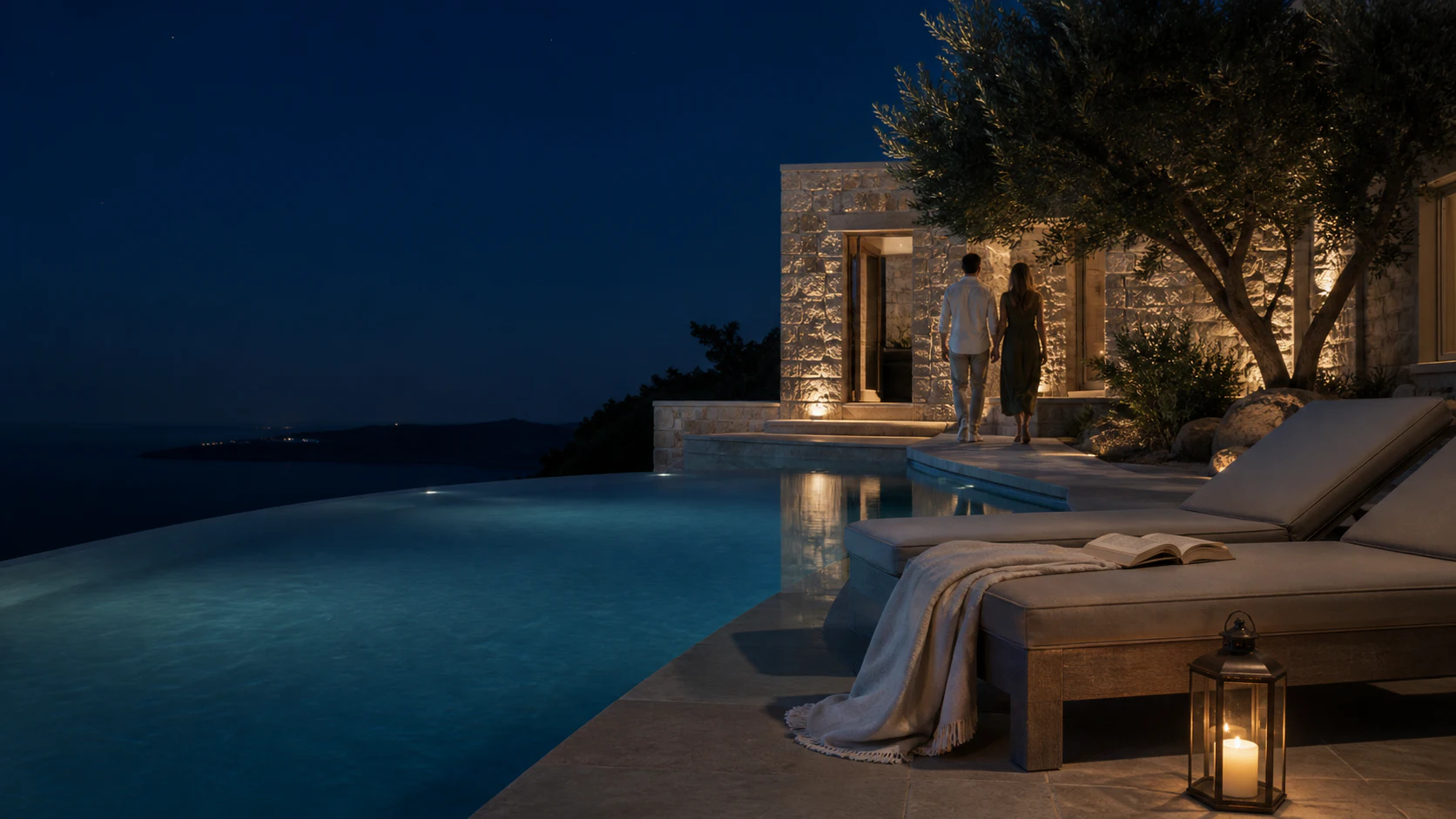
 Photo 1 of 4 for Villa Eros
Luxury villas in Crete
Planning a villa holiday in Crete
Crete is not an island you see from one sunbed. It is the largest island in Greece, with two international airports, a mountain spine dividing the busy north coast from the quiet south, and about six hours of driving between its far west and far east. The biggest decision of the holiday is not which villa. It is which part of Crete.
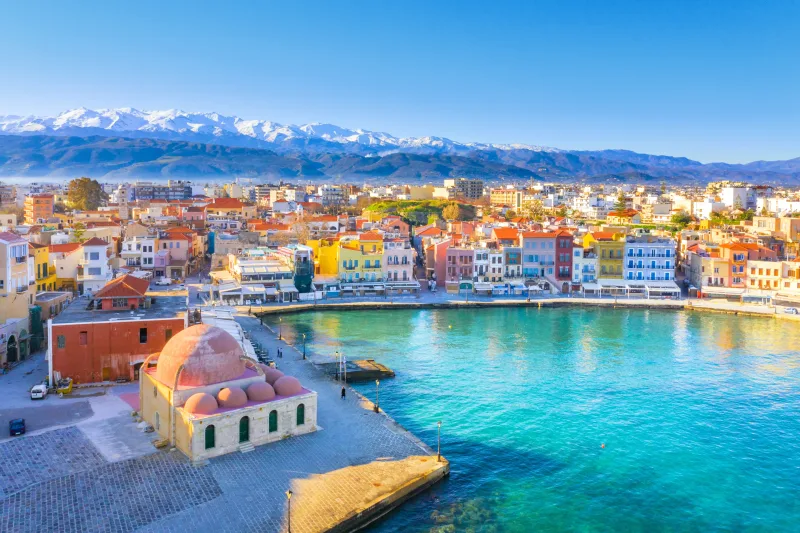
The west is Chania's territory: the Venetian harbour, the White Mountains behind it, and the famous west-coast beaches. The east is Elounda and the Gulf of Mirabello, the island's luxury quarter, with calm water and Spinalonga offshore. The centre holds Rethymno's old town, Knossos and the wine country.
A villa with its own pool and kitchen, plus a hire car, is how this island actually works: one well-chosen base, and day trips that radiate out from it. Give it at least five to seven nights; the island is large, and time to explore one half properly is what makes the week. Browse the current Crete collection below, or give us your dates, group size and budget and we will help narrow it down.
Where to stay in Crete: west, centre or east
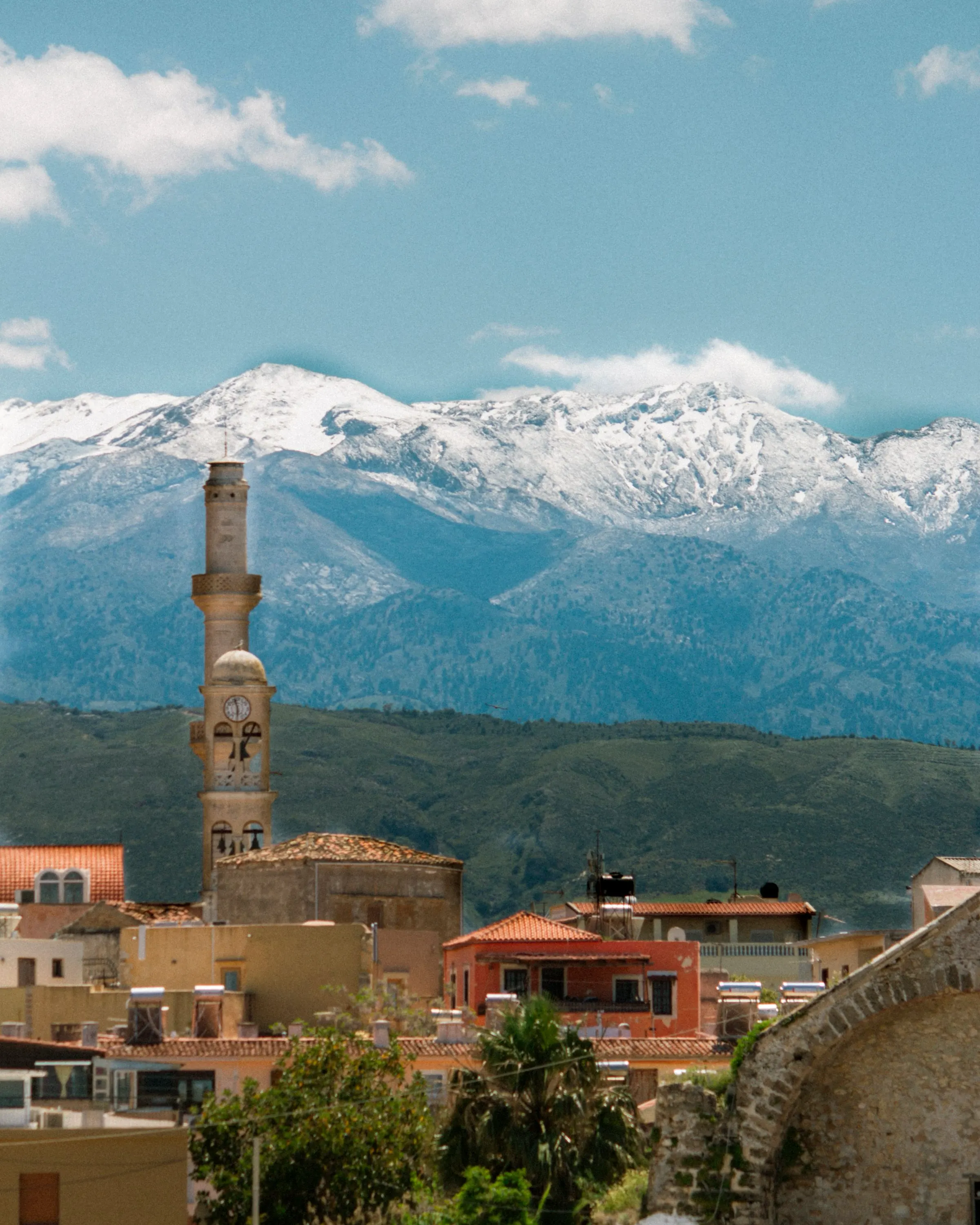
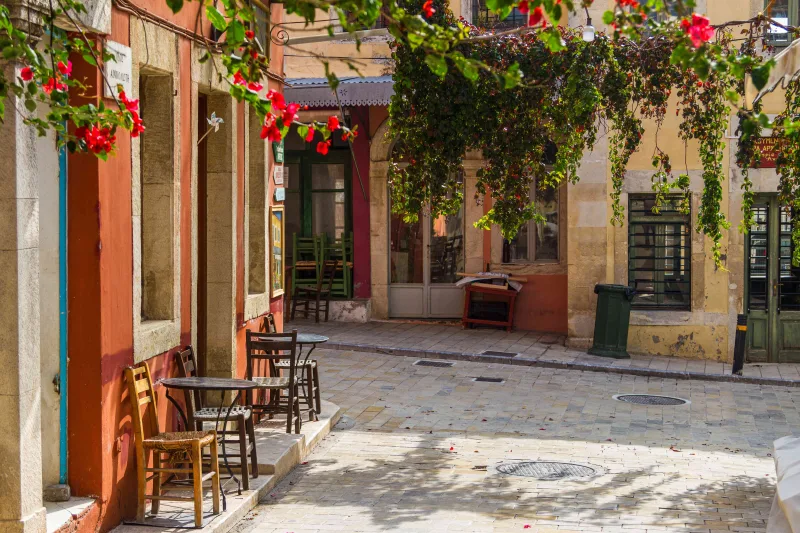
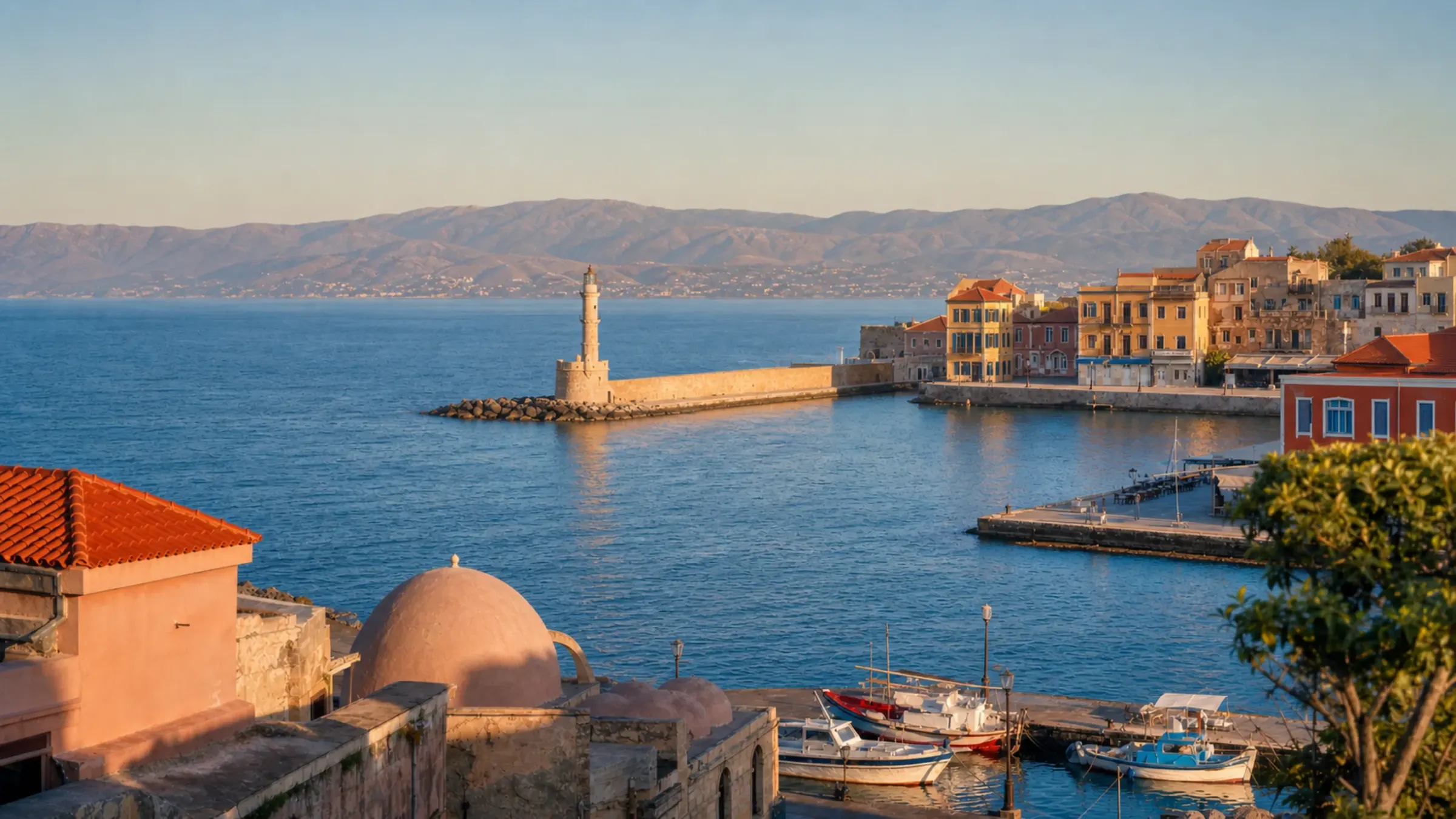 Chania and the westThe Venetian harbour has stood since the 1320s, with a restored lighthouse and a tangle of old-town lanes behind it, and the White Mountains rise to the south. The strongest first-time base on the island: old town in the evening, a beach in the morning, and Elafonissi, Balos and Falassarna within day-trip range. The Apokoronas villages around Almyrida and Kalyves trade the town for green hills and quieter coast.Explore Chania and the west villas
 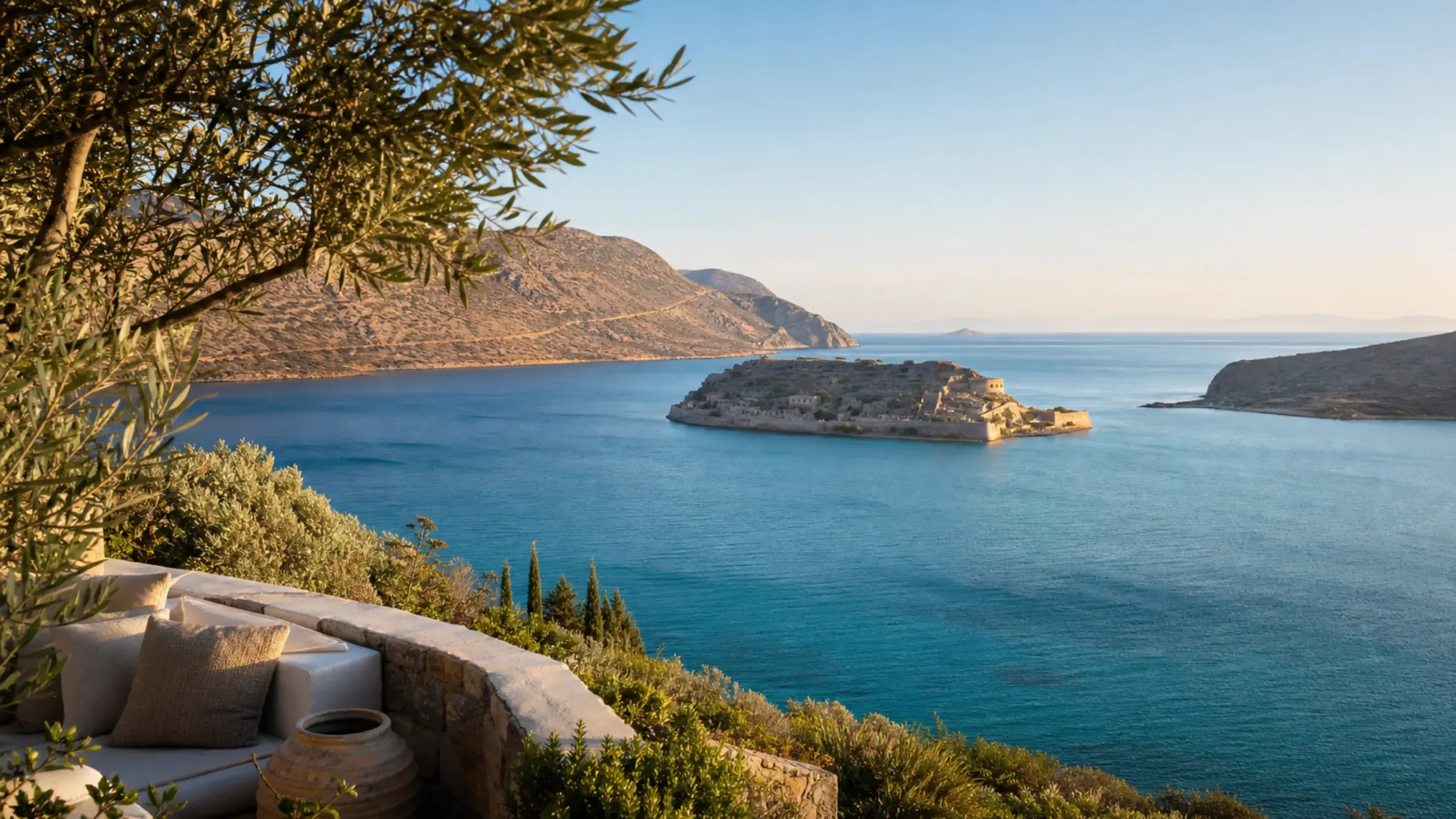 Elounda and PlakaA fishing coast that became an exclusive resort in the 1970s and never gave the reputation back. The water of the Mirabello gulf is calm, Spinalonga sits just offshore, and Plaka at the northern end keeps a village feel. The most polished week Crete offers; it is a long transfer from Heraklion airport and a poor base for seeing the west, and it does not pretend otherwise.Explore Elounda and Plaka villas
 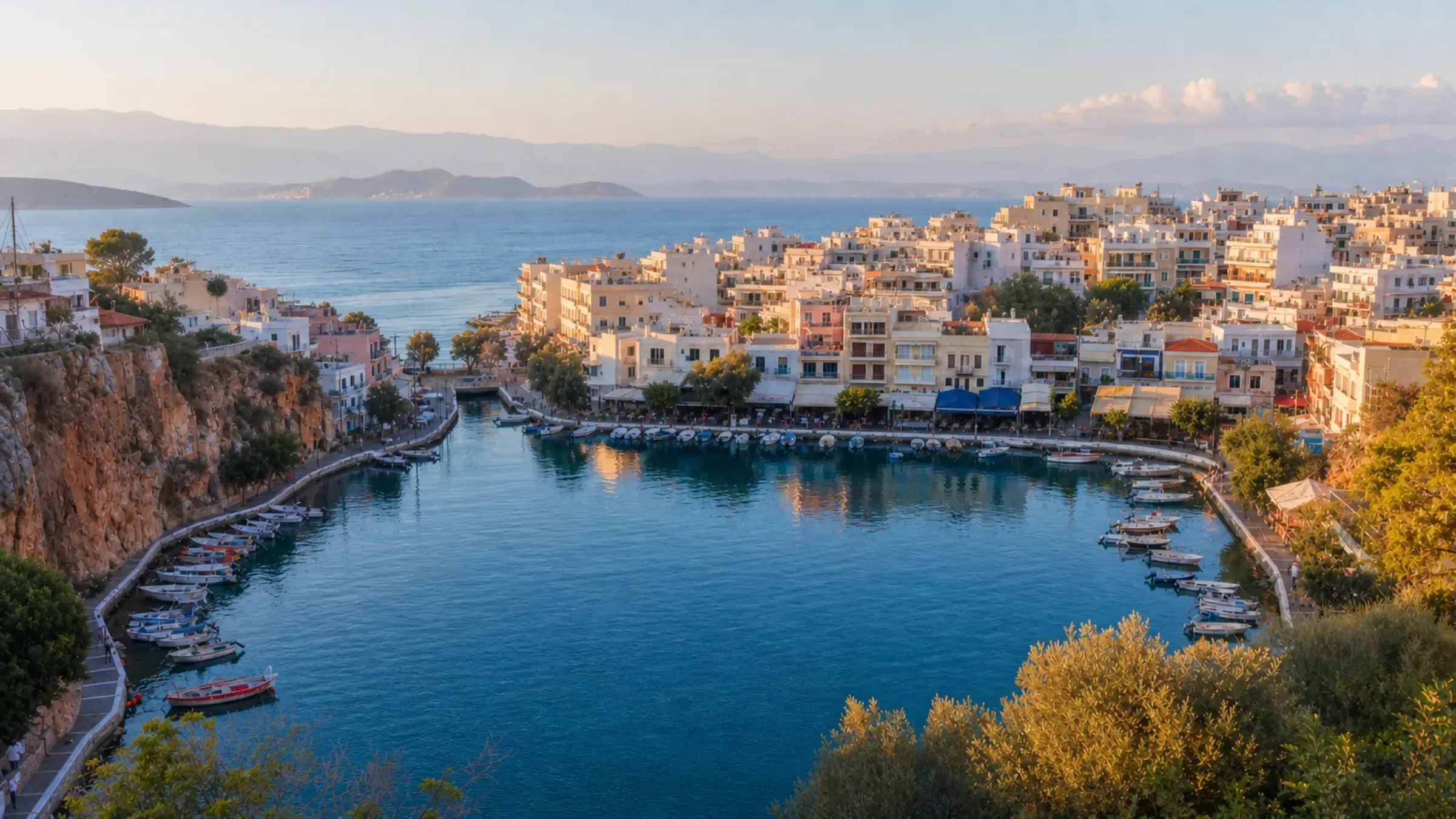 Agios NikolaosThe working harbour town of the east, about 10 km from Elounda, built around a small lake harbour and supplied with the restaurants, shops and boat departures the resort coast relies on. A practical base for eastern Crete with more life in the evenings than the resort enclaves.Explore Agios Nikolaos villas
 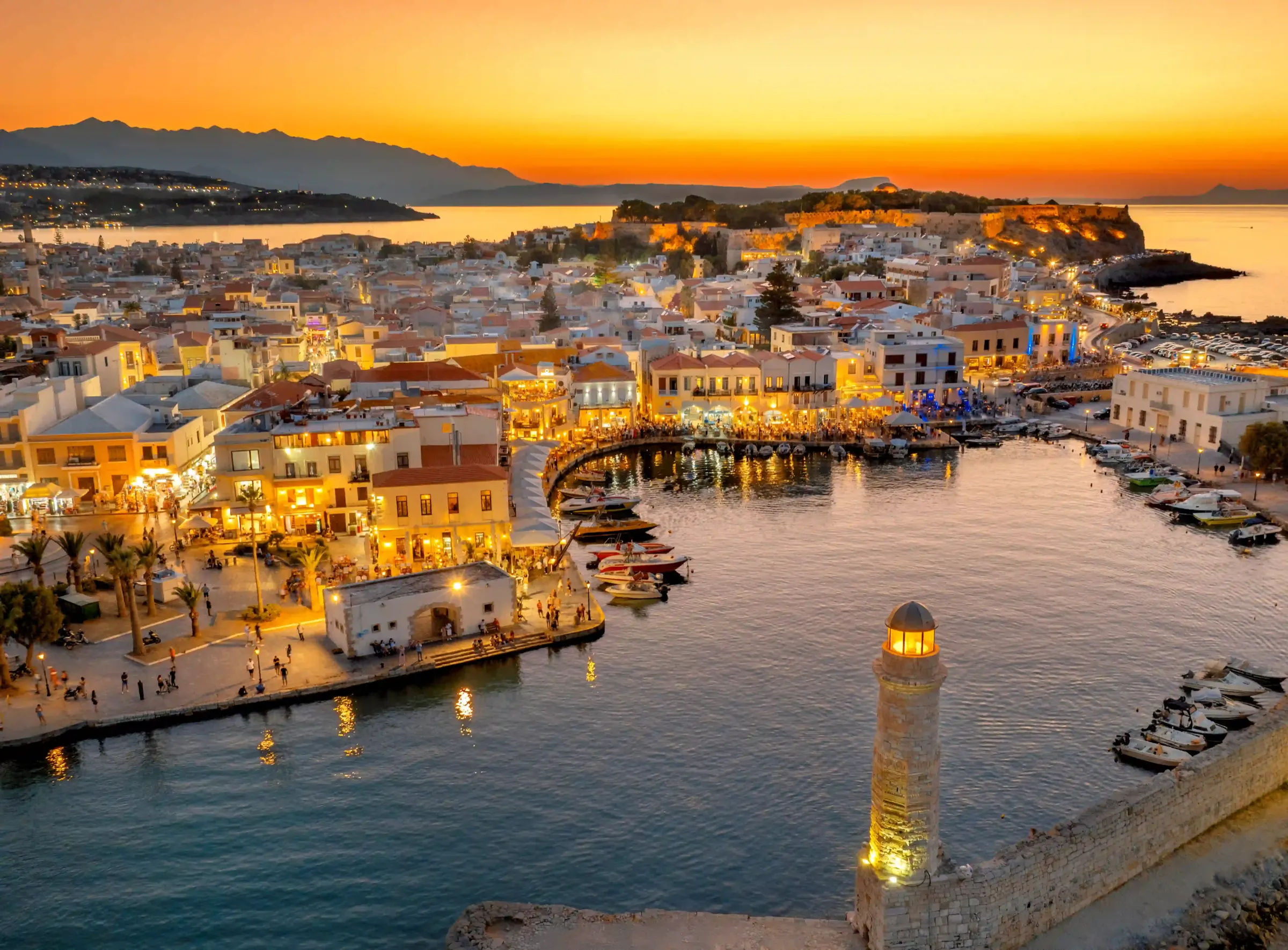 RethymnoOne of the best-preserved old towns on Crete, Venetian and Byzantine buildings along narrow lanes under the 16th-century Fortezza, with a long sandy beach running east of the town. It sits between Chania and Heraklion, which makes it the compromise base: both halves of the island within reach, at the cost of longer drives to either.Explore Rethymno villas
 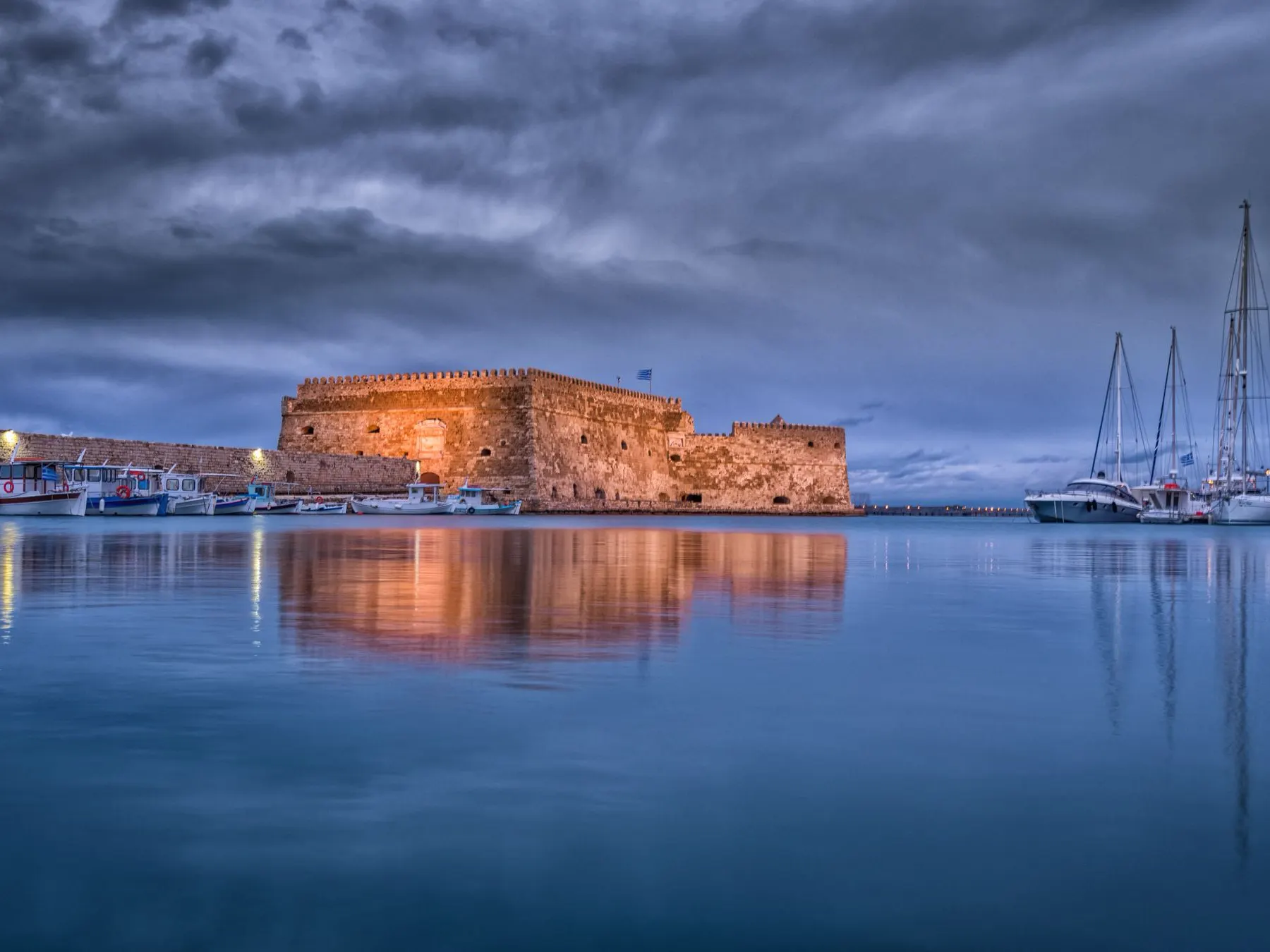 Heraklion and its coastCrete's biggest city, its main ferry port, and the doorway to Knossos and the Peza and Archanes wine country. The city itself is for sightseeing rather than sunbathing; villas sit in the coastal villages either side, with the sheltered bays of Agia Pelagia and Lygaria to the west. Choose it to put the island's headline sights on your doorstep.
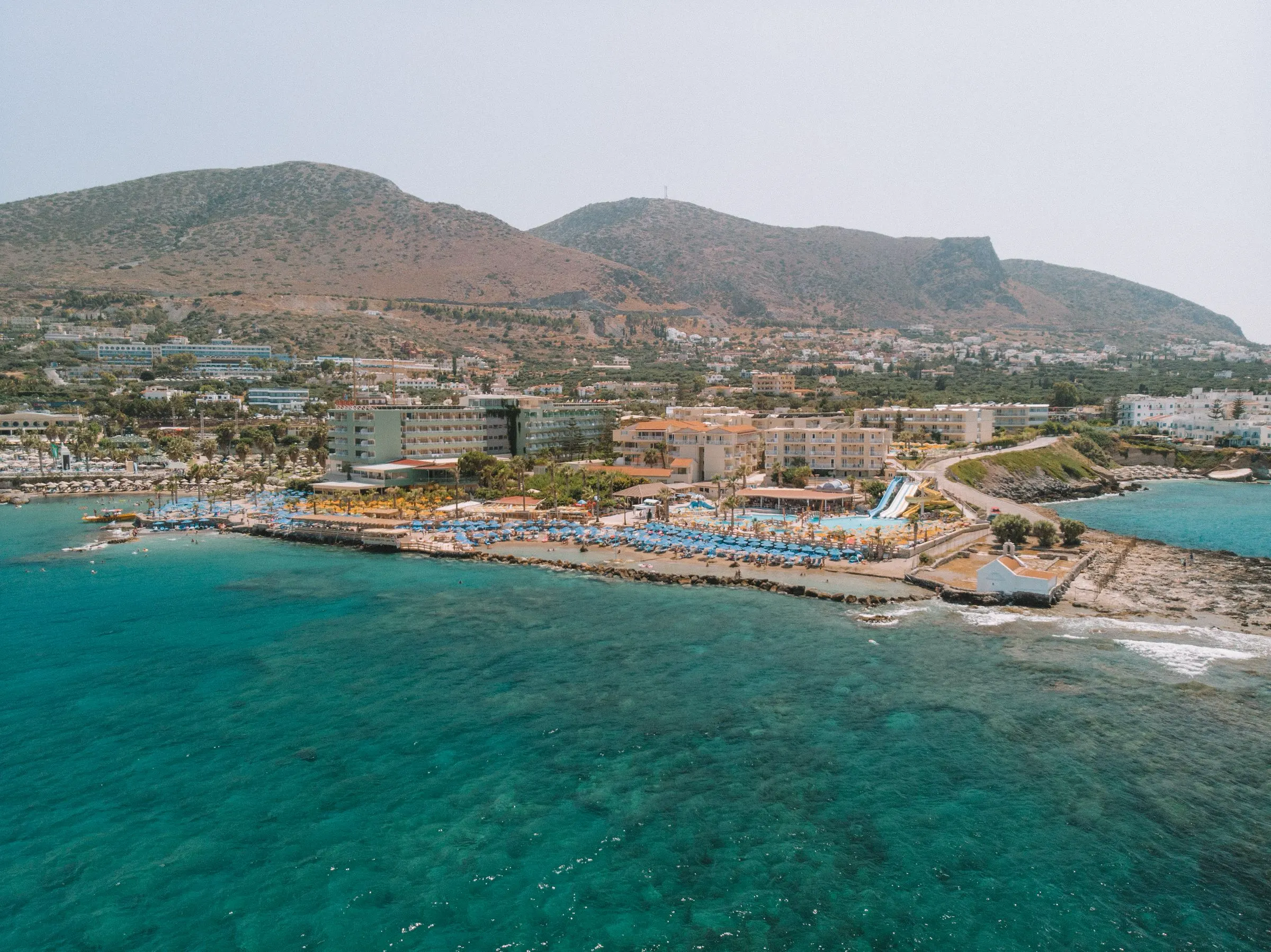 HersonissosThe north coast's purpose-built holiday strip: waterparks, bars and nightlife, with the old hill villages of Koutouloufari and Piskopiano directly behind it offering taverna evenings above the noise. Stay here if you want facilities, buzz and a short transfer. If that is not the week you are planning, base somewhere else and Crete is big enough that you will never notice it.
Agia Pelagia, the sheltered swimming closest to Heraklion, has its own page: see villas in Agia Pelagia. Heraklion and Hersonissos do not yet have their own Bnbstay area pages; a villa specialist can shortlist stays in either from the full Crete collection.
Crete villas with private pools, sea views and room for a group
A private pool earns its keep on Crete: the season is long, the afternoons are hot, and after a morning's drive to a famous beach the pool is where the rest of the day goes. Filter by bedrooms, pool, sea view or budget, or tell us your dates, group size and budget and we will shortlist for you.
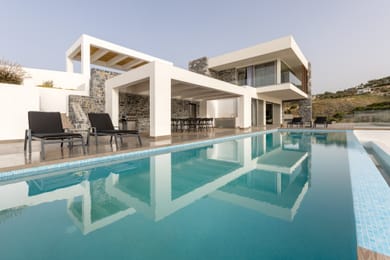
Photo 1 of 4 for Villa Eros Photo 1 of 4 for Complex of 2 villas
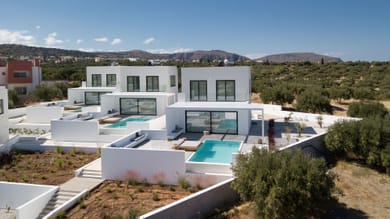 Summer Sale−15%Photo 1 of 4 for Villa
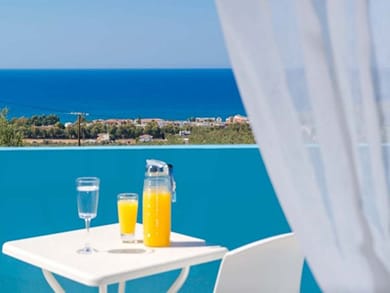 Summer Sale−20%Photo 1 of 4 for Two Bedroom Villa with Private Pool & Sea View
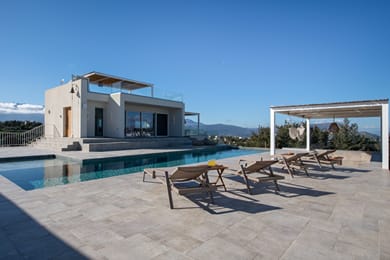 Photo 1 of 4 for Villa Camilla
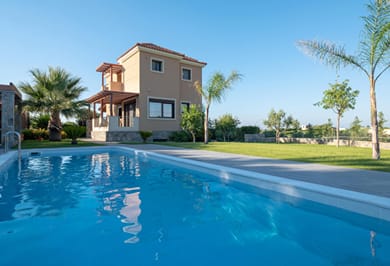 Photo 1 of 4 for Luxurious Villa David
Why Crete?
Crete is the largest island in Greece, roughly 260 km end to end and up to 60 km wide, with international airports at both Chania in the west and Heraklion in the centre. The season runs long: the sea off Heraklion is warmer in October, at about 22 to 23°C, than it is in May, because it has been heating all summer.
One base does not cover the island, and does not need to: each half of Crete carries a full holiday of beaches, ruins and mountain villages within day-trip range. That scale is also why Crete feeds you better than almost anywhere in Greece and why walkers rate it the best island in the country.
The beaches of Crete: coast by coast
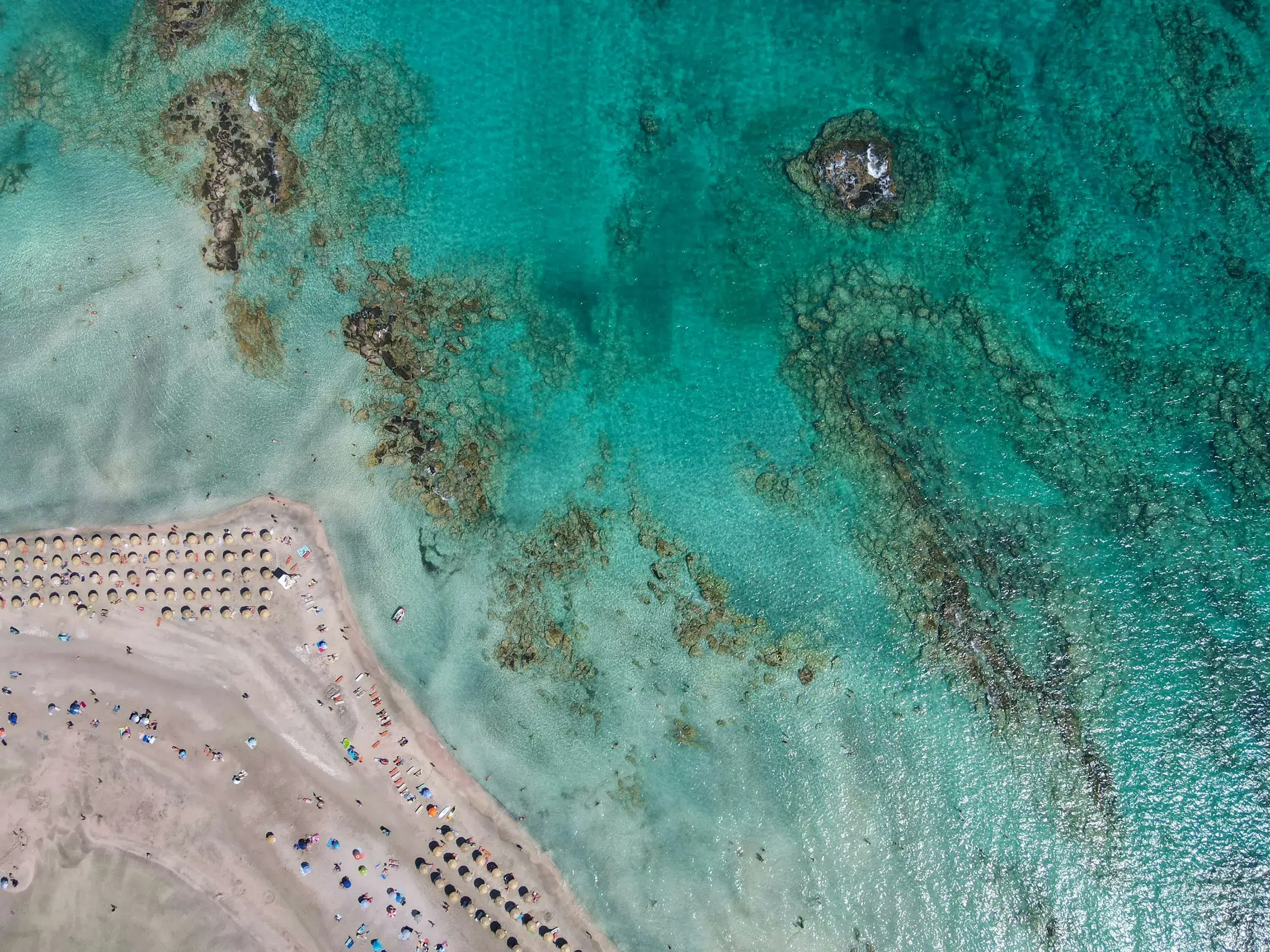
Crete's beaches sort themselves by coast. The north carries the organised, easy-access sand near the towns. The far west holds the three famous ones, which are day trips rather than local swims from almost anywhere. The south is the quiet coast, where the best beaches are reached on foot and bring their own supplies. The far east has the palm forest.
Elafonissi
About 75 km southwest of Chania, roughly an hour and a half's drive or an organised coach trip. An islet sits some 200 metres offshore across a lagoon shallow enough to wade, the white sand carries pink patches, and the main stretch is organised. It is a protected Natura 2000 site with nesting loggerhead turtles, and taking sand is forbidden. Arrive early in peak season.
Famous lagoon | day trip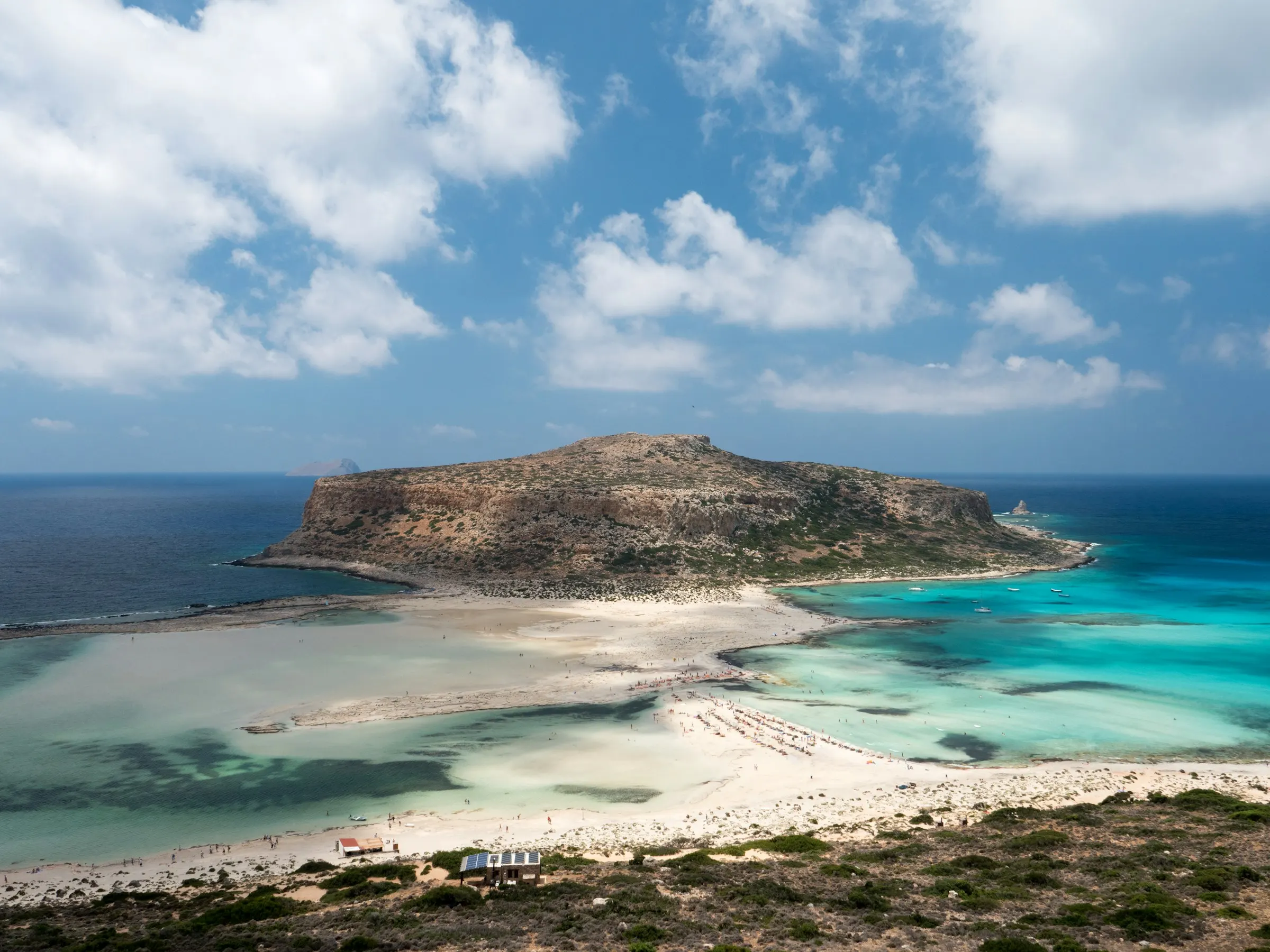
Balos
The lagoon in all the drone shots, between Cape Gramvousa and Cape Tigani. Overland access is an unpaved road that many hire-car policies exclude, ending in a long flight of steps down to the sand and back up in the afternoon heat. The boat from Kissamos is the easier way in. Go early or in shoulder season; it is not a secret.
Iconic | boat or steps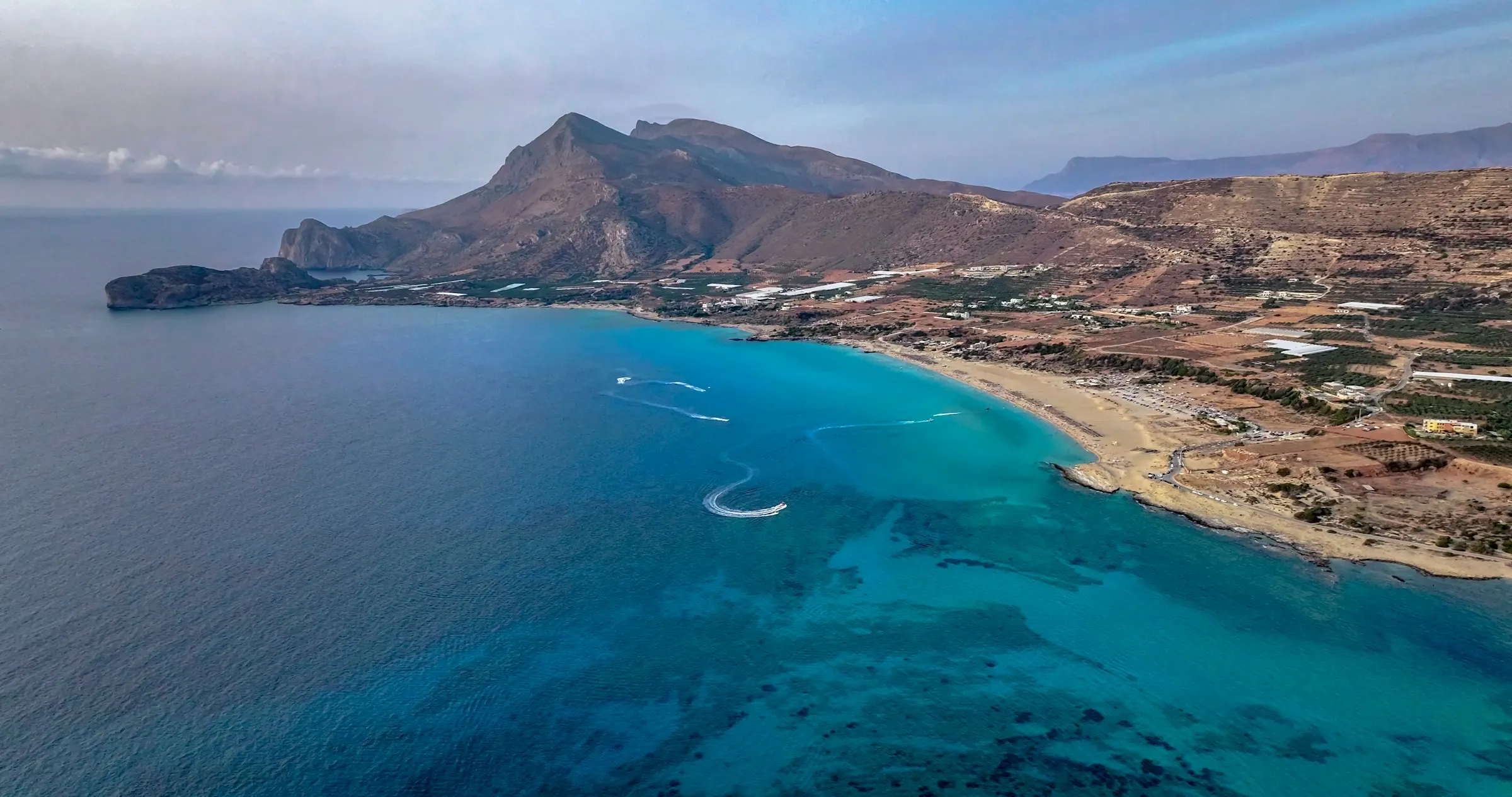
Falassarna
Crete's far western end: really five consecutive beaches, with Pachia Ammos the most used stretch. Clear water, organised facilities, water sports and windsurfers when the wind gets up. The beach faces west, so stay for the sunset.
Organised | sunsets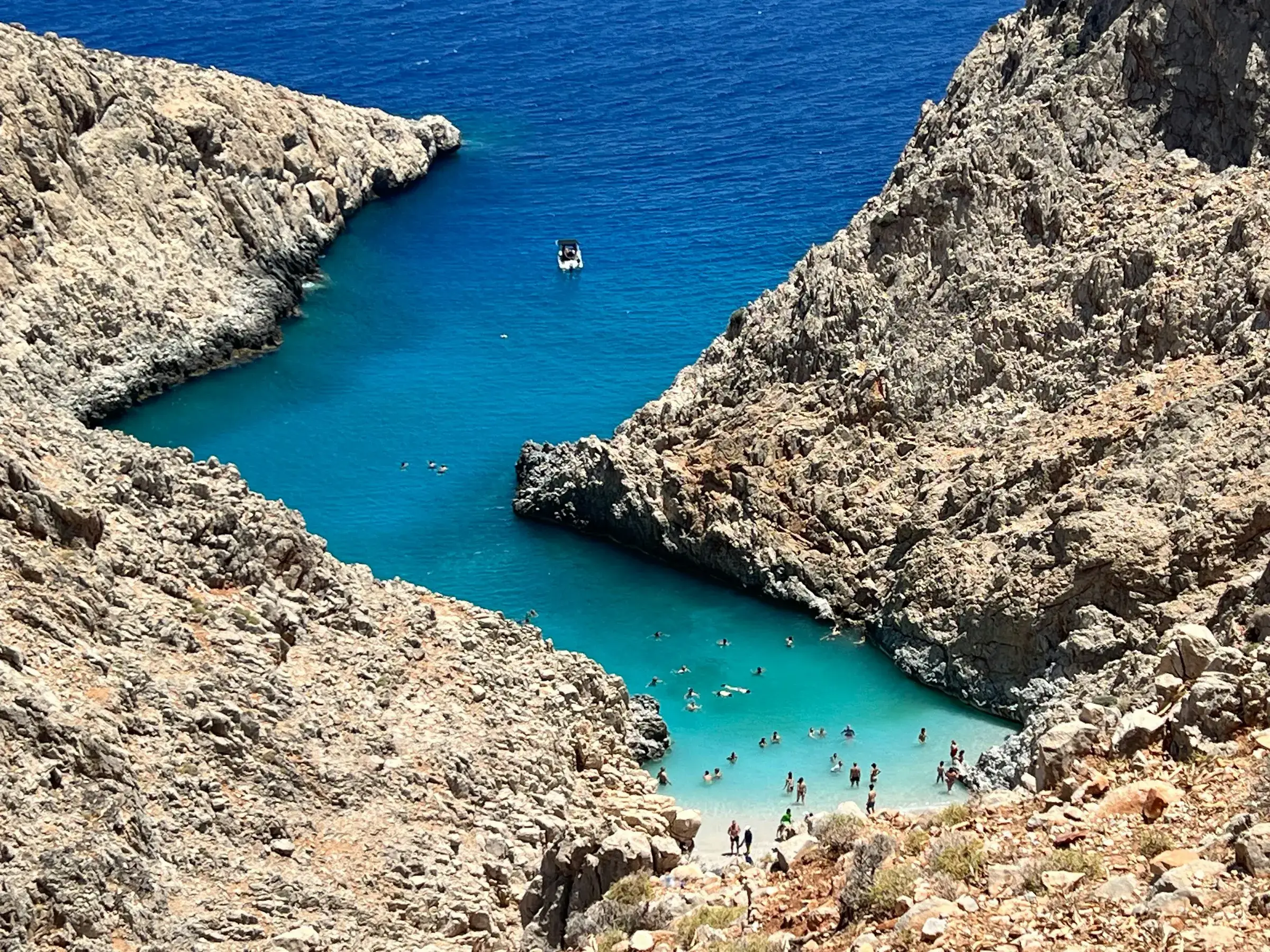
Seitan Limania
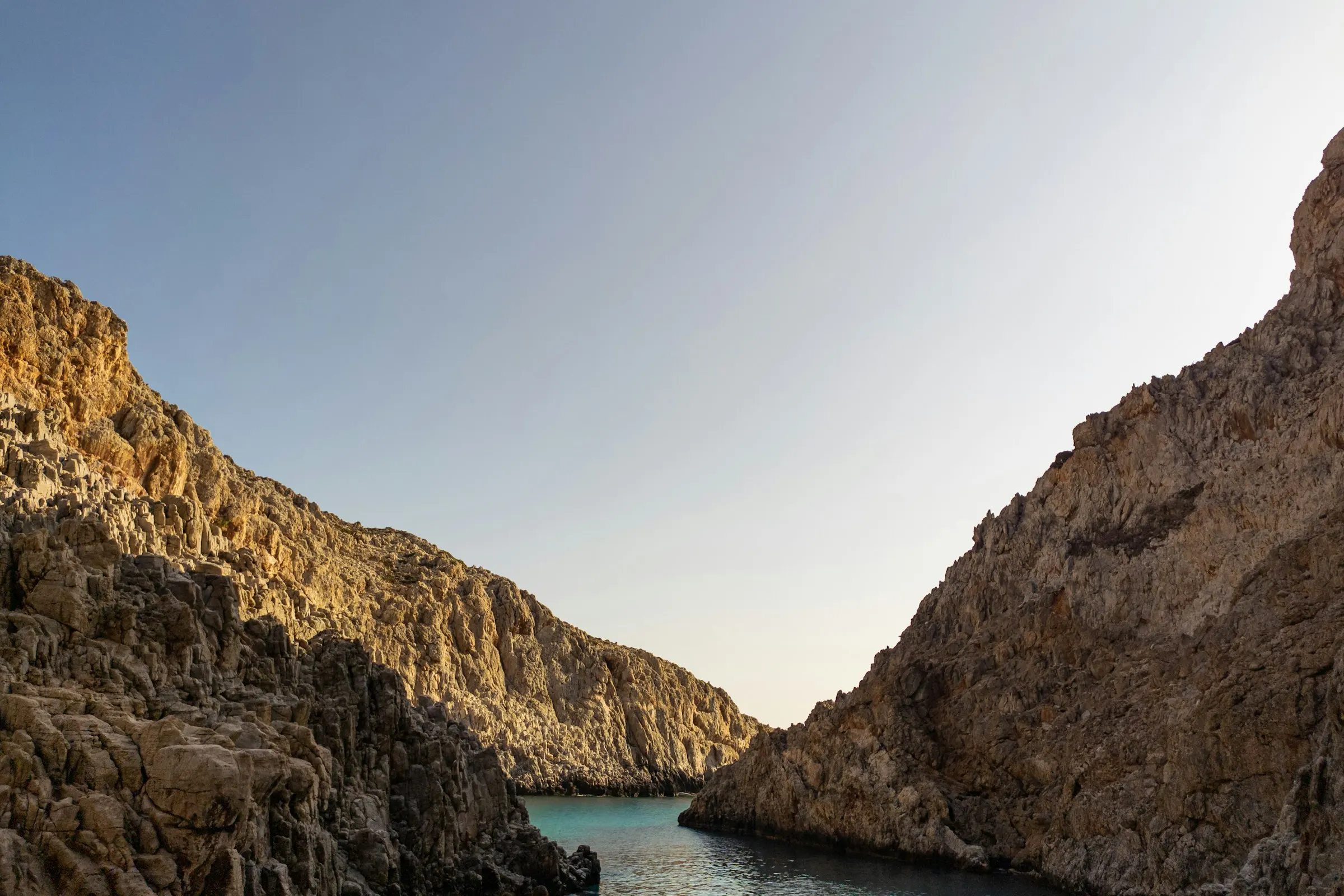
A narrow cove between high rock walls on the Akrotiri peninsula, about 22 km from Chania. Access is a drive down switchbacks and then a steep scramble on foot, so wear real shoes and carry water; there are no facilities. Tiny, and it fills fast in summer.
Walk-in | early startsStavros
The family beach of the Akrotiri peninsula: a sheltered, shallow bay under a bare mountain, with tavernas behind it. Kalathas, back along the peninsula road, is the quieter clear-water alternative.
Sheltered | family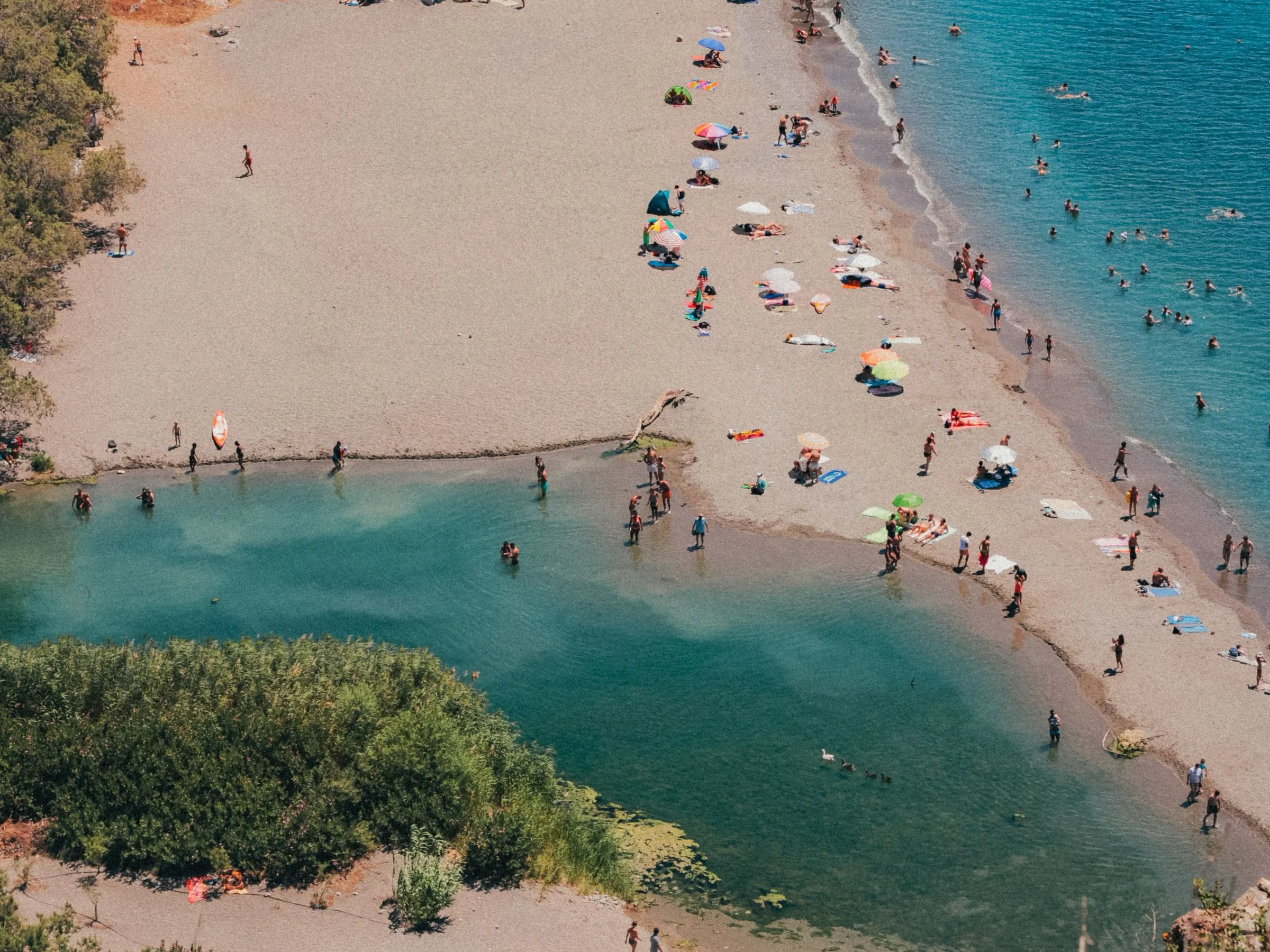
Preveli
On the south coast below the Kourtaliotiko gorge, where a river reaches the sea through a grove of native palms and keeps the swimming noticeably cool. Unorganised, sand over a pebbly seabed, and worth the walk down.
South coast | walk-in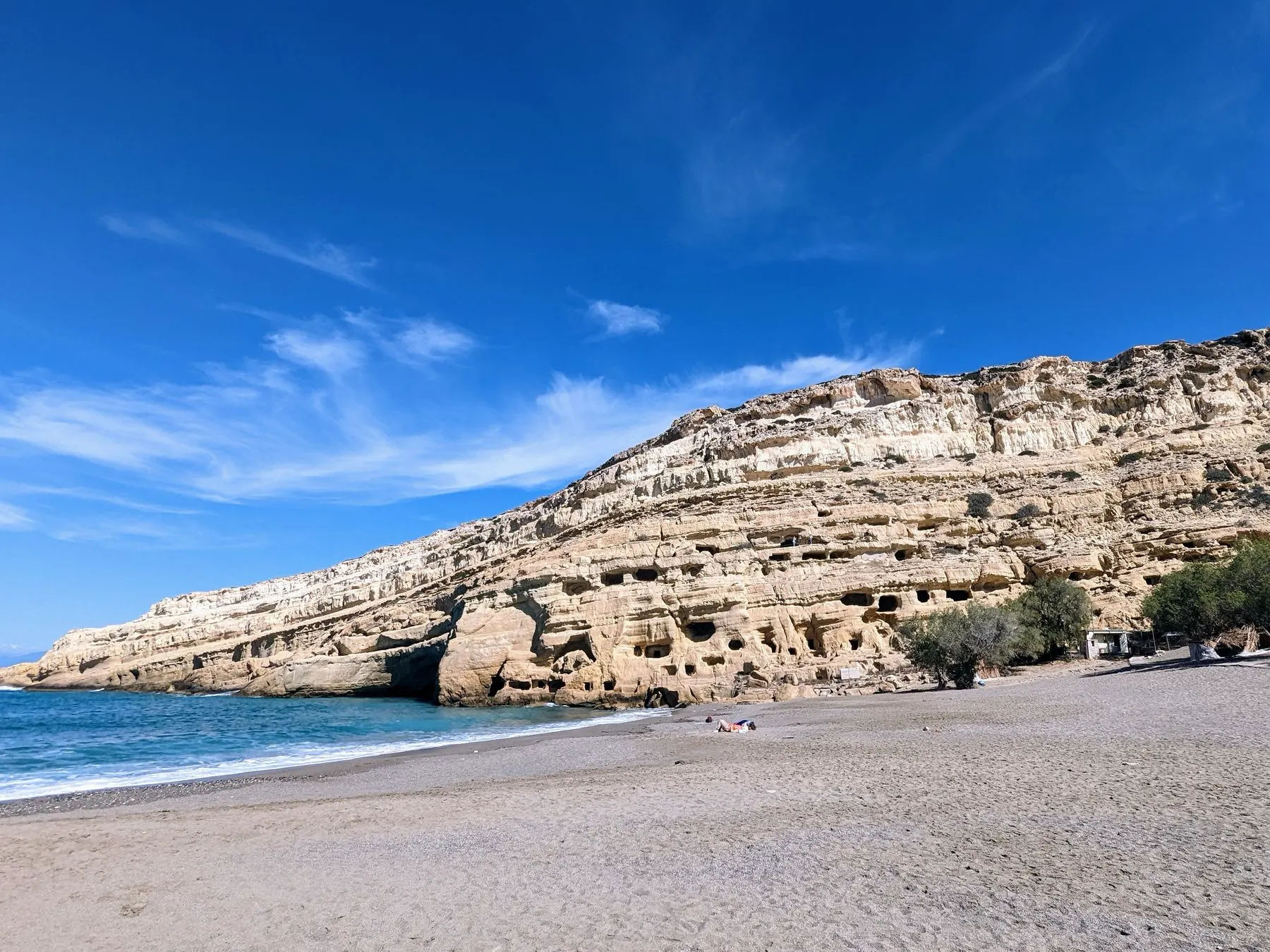
Matala and Kokkini Ammos
Matala's cliff is honeycombed with carved caves, its 1960s history is the town's brand, and in season it is usually crowded. The quiet way out is Kokkini Ammos, the red-sand beach around the headland, reached only on foot.
Caves | busy in seasonKalamaki and Kommos
More than 3 km of sand at Kalamaki, uncrowded and a nesting shore for Caretta caretta turtles, with taverna villages just inland. Neighbouring Kommos adds tamarisk shade and the ruins of the ancient port that served Phaistos behind the beach.
Quiet | long sandAgia Pelagia and Lygaria
Two sheltered bays west of Heraklion, the practical swimming closest to the capital's villas. Organised, calm and easy with young children.
Sheltered | familyVai
Crete's easternmost beach, beyond Sitia, beside a protected native palm forest that exists almost nowhere else in the Mediterranean. A ten-minute footpath in, and the facilities amount to a canteen, so bring what you need.
Palm forest | far eastThe walk-in beaches, Seitan Limania, Kokkini Ammos, Vai and the south-coast coves, mean real shoes, water and cash: carry all three. And start the famous west-coast days early; Elafonissi and Balos reward the first arrivals and punish the midday ones.
Things to do in Crete
Crete has more to do than any other Greek island, and the distances are real: plan each day trip from your base rather than trying to tour.
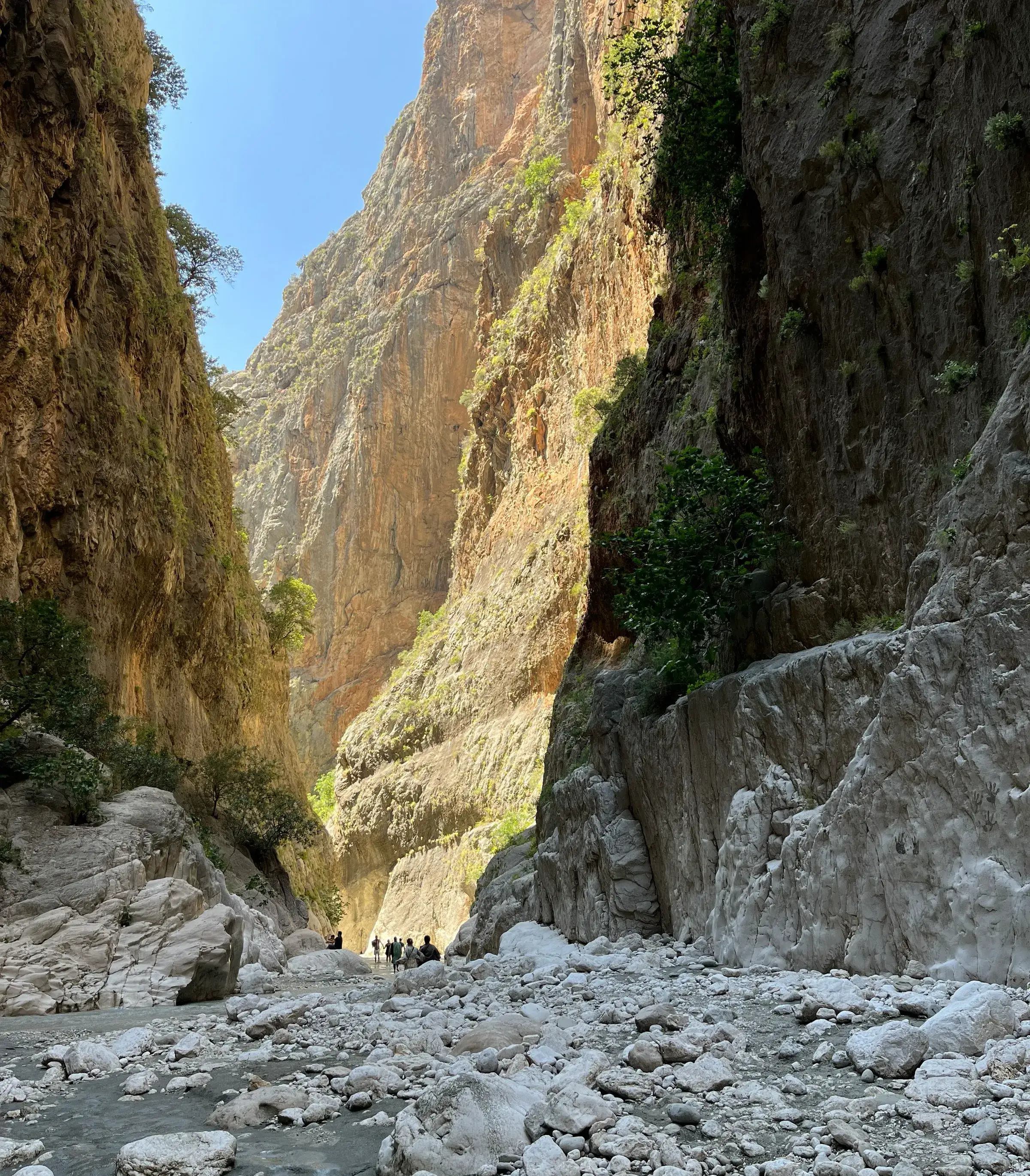
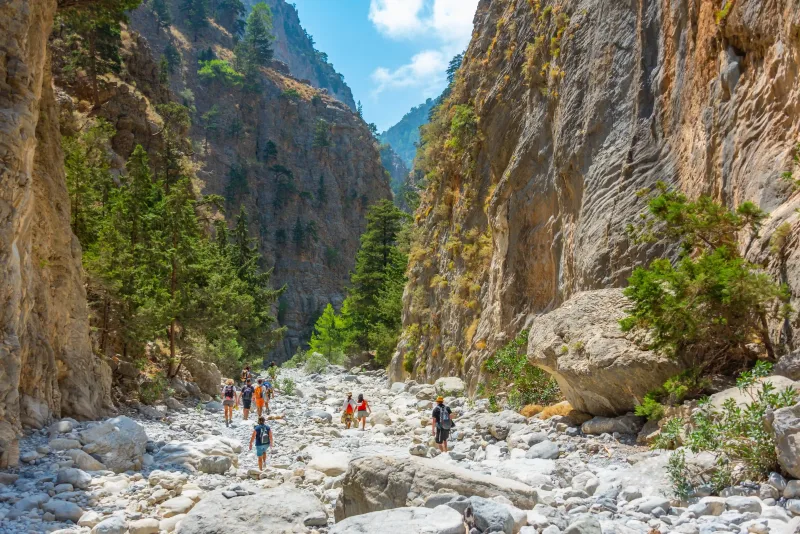
Walk the Samaria Gorge
The headline walk of the Greek islands and one of Europe's longest gorges: about 16 km, taking most walkers four to six hours. It normally opens from early May to the end of October, weather permitting, so check the current status before planning around it. Agia Roumeli at the exit has no road; you leave by boat to Chora Sfakion or Sougia and then a bus back. Start early, wear boots and treat it as the full day it is. Shorter gorges nearby suit anyone not ready for 16 km.
Knossos and the Heraklion Archaeological Museum
Knossos is the largest Bronze Age site on Crete and the centre of Minoan civilisation, the palace the Minotaur legend grew around, a short drive from Heraklion. Pair it with the Heraklion Archaeological Museum, whose collection spans roughly 5,500 years. Do the museum after the site, when the frescoes mean more.
Take the boat to Spinalonga
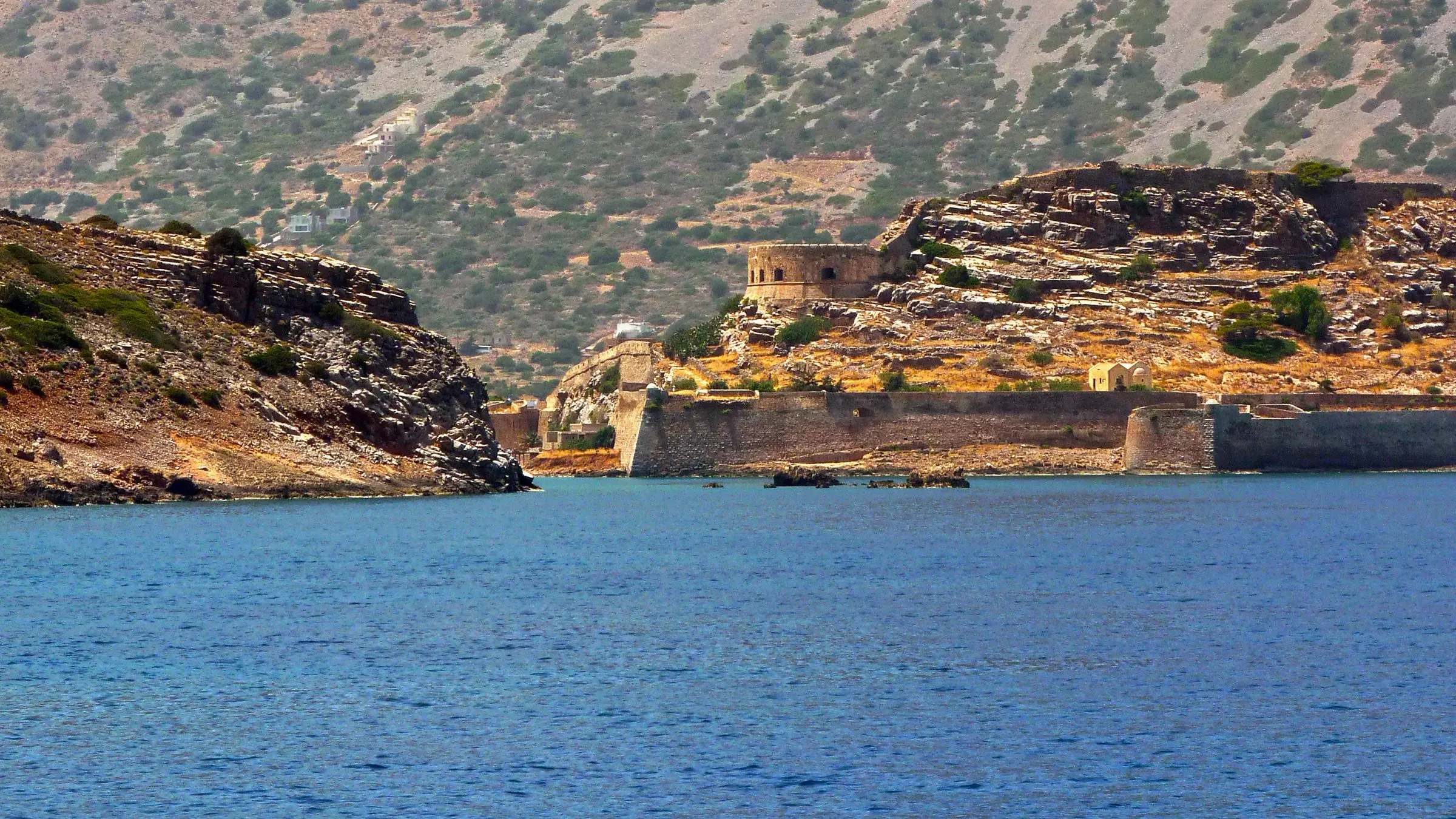
A mile off Elounda, a fortress island with three lives: Venetian stronghold, Ottoman village until 1903, and then a leper colony whose hospital only closed in 1957. Victoria Hislop's novel The Island made it famous. Boats run from Agios Nikolaos, Elounda and Plaka; go early in the day for cooler walking.
Go up to the Lasithi Plateau
A fertile plain at about 850 metres, ringed by peaks and entered past lines of famous disused windmills. On the plateau's edge is the Diktaean Cave, in myth the birthplace of Zeus. The drive up from Agios Nikolaos or Heraklion is the point as much as the destination.
Take the day boat to Santorini
Heraklion is a real ferry port, and Santorini is from about 1 hour 35 minutes away on the fastest catamarans. Seasonal day trips run; treat anything tighter than a full day as optimistic and check the current schedule for your dates. It is only practical from Crete's centre and east.
If the day boat tempts you into a longer stay on the other side, our Santorini guide covers how the two islands differ.
Food and drink in Crete: dakos, raki and the wine country
Crete feeds you better than almost anywhere in Greece, and it does it from its own fields. Cretan olive oil goes on everything, starting with dakos: a twice-baked paximadi rusk softened under chopped tomato and mizithra cheese. Graviera and mizithra are the cheeses to order, often served with local thyme and sage honey, and meals are relaxed and unhurried, usually finished with a small glass of ice-cold raki, often on the house. In Rethymno the rakadika, small bars serving raki with meze, are an evening in themselves.
This is also Greece's most serious island wine country. The Peza and Archanes zone behind Heraklion is the largest wine region on the island; look for Vidiano among the whites and Kotsifali among the reds. In the south, the villages of Kamilari, Sivas and Pitsidia keep honest traditional tavernas, with fish on the coast at Kalamaki and Matala.
What to order
Dakos, graviera and mizithra with thyme honey, slow-cooked lamb, fresh fish on the coast, Vidiano by the glass and ice-cold raki to finish.
What to check
Winery tours in the Peza and Archanes zone run in season; check current availability before building a day around one. Fresh fish is often priced by weight, so confirm the weight and total before it goes to the kitchen.
The early start that pays
Head to Seitan Limania before the crowds. The cove is tucked between steep cliffs and feels almost hidden until you are right above it; the walk down is short but steep, so wear real trainers and carry your own water, and there is almost no shade. By late morning in summer it is full. At eight in the morning it is one of the best swims in Greece.
The beach with nothing on it: Agiofarago, on the south coast, is reached by a walk of about 30 minutes down its gorge and has no facilities at all. Carry in what you need and you get a beach that organised Crete forgot.
Crete with children, and who else it suits
Yes is the short answer for families: the assortment of beaches, activities and space makes Crete one of the easiest Greek islands to plan with children. With babies and toddlers, stay north coast and sheltered: Stavros on the Akrotiri peninsula and Agia Pelagia west of Heraklion are calm, shallow bays, and the organised beaches keep the logistics short. With older children, Crete is the Greek island that comes with its own stories: the Minotaur's palace at Knossos, the fortress island of Spinalonga by boat, a dinosaur park next to the Cretaquarium, and the shallow lagoon at Elafonissi on an early start. With teenagers, use the big island properly: the full Samaria walk with the boat-and-bus exit, the Balos boat from Kissamos, the caves at Matala.
Beyond families, Crete suits couples in May, June, September and October, groups who want serious food and room to spread out, and walkers, for whom this is the best island in Greece.
Two honest notes. Distances first: pick one half of the island and stay there, because a base in Chania makes Elounda a bad idea and vice versa. Second, Hersonissos and Malia carry Crete's package nightlife; the strip is easy to avoid, but do not book beside it by accident if quiet evenings are the point. And if what you want is one tiny cove and no car keys all week, a smaller island will serve you better, and we would rather say so now.
When is the best time to visit Crete?
May, June and September are the easy answers: warm, swimmable and more relaxed than the peak of summer. Crete's season is the longest in Greece, and the month you choose changes the island more than the villa does.
MayThe connoisseur's month: daytime highs around 23°C, long days, wildflowers still on the hills and comfortable temperatures for Knossos and the gorges. The sea is the trade-off at about 19 to 20°C: swimmable, but fresher than the brochure photos suggest.
JuneThe sea warms and the calendar fills; from the middle of the month everything is open and the crowds build.
July and AugustPeak Crete: the busiest beaches, the warmest swimming and the strongest demand for villas. Book well ahead and start the famous-beach day trips early.
SeptemberPossibly the island's best month. The sea, heated all summer, is at its warmest, the crowds thin week by week, and it is grape harvest in the wine villages.
OctoberYes, it is still warm. Heraklion averages daytime highs around 23°C with the sea at about 22 to 23°C, warmer than in May. Evenings cool to around 17°C, so pack one layer.
November to AprilLocal Crete: roughly 12 to 20°C by day in November with around ten rainy days, near-deserted beaches and a sea still swimmable early on. Mild, often sunny, and a different, quieter holiday.
Getting to Crete: two airports, and how to choose
Crete has international airports at Chania (CHQ) in the west and Heraklion (HER) in the centre, and the rule is simple: flying to the wrong one adds hours of driving. Match the airport to the villa, not the fare.
Which airport?
Villas in Chania, Apokoronas and the west want Chania. Heraklion, Hersonissos, Agios Nikolaos and Elounda want Heraklion. Rethymno sits between and is workable from either. A small third airport at Sitia serves the far east with limited routes; check current schedules before relying on it. Your exact transfer time is supplied with the individual stay.
Flights from the UK
Direct flights take around four hours from London to either airport, a little longer from northern and Scottish airports, with airlines such as Jet2, TUI, easyJet and British Airways flying into both Chania and Heraklion in season. Routes change each year; outside the direct season, connect through Athens.
By sea
Overnight ferries leave Piraeus, the main port of Athens, in the evening and reach Heraklion early the next morning; services also run to Souda, the port of Chania. Check the current timetable. It is the slow, sensible way to bring a car full of luggage.
Getting around
Hire a car. Crete is the one Greek island where that sentence needs no qualifier: distances are real, the best beaches are drives, and your own transport reaches the beaches, villages and viewpoints that are harder to access otherwise. A 4x4 is not needed to reach most villas. Buses run between the major towns, though they are less frequent for smaller areas.
The ferry route starts from Piraeus in Athens, which is worth a day or two in its own right on either side of the crossing.
Talk to a Crete villa specialist
Tell us who is travelling, when you want to go, where you would like to stay and what matters most.
Questions about Crete
Where is Crete?
Crete is the largest and southernmost major island of Greece, at the southern edge of the Aegean Sea, and yes, it is in Greece and in Europe. It sits south of Santorini and the Cyclades, with its own pair of international airports at Chania and Heraklion, around four hours' direct flight from London.
How big is Crete?
Big enough to change how you plan. Crete is the largest island in Greece, roughly 260 km long and up to 60 km wide, with around 624,000 residents at the 2021 census. Driving the full length takes about six hours without stops, which is why one villa plus day trips beats touring.
Is it safe to travel to Crete after the earthquakes?
Crete sits in one of Europe's more seismically active zones, and the recent activity has been offshore or deep. In May 2025 two earthquakes of around magnitude 6 struck under the sea near the island; they were felt widely but no injuries or serious damage were reported. In April 2026 a magnitude 5.7 quake southeast of Ierapetra, and in August 2026 a magnitude 5.8 in the same area, again passed without reports of serious damage. The UK Foreign Office has not advised against travel to Greece at any point in this sequence; its standing advice is to know the safety steps, monitor local media and follow instructions from local authorities, including alerts sent to phones by the 112 emergency system. Tremors can happen during any stay; modern Greek buildings are constructed to seismic codes, and holiday operations across the island have continued as normal.
What is the weather like in Crete in May?
Days around 23°C in Heraklion, long and mostly dry, which is why May is the walking and sightseeing month. The sea is the honest caveat at about 19 to 20°C: fine for a swim, cooler than late summer.
Is Crete hot in October?
Yes, by most people's definition. Heraklion averages daytime highs around 23°C in October, and the sea is at its year-round warmest band, about 22 to 23°C, warmer than in May. Evenings drop to around 17°C. It is Greece's most dependable October island.
Where should I stay in Crete?
Pick a side before a village. First visit with beaches in mind: Chania and the west. Calm water and the island's most polished stays: Elounda and Plaka in the east, with Agios Nikolaos as its livelier neighbour. Headline sights and wine country: Heraklion's coast, with the sheltered bays of Agia Pelagia. Old-town charm midway between the two: Rethymno. Nightlife and facilities on a strip: Hersonissos. Our where-to-stay section above takes each in turn.
How long is the flight to Crete from the UK?
Around four hours direct from London to either Heraklion or Chania, a little longer from northern and Scottish airports. Direct routes are seasonal and change by year; outside the season, connect through Athens.
Which airport should I fly into, Chania or Heraklion?
Match the airport to the villa, not the fare. Chania serves the west (Chania town, Apokoronas, the west-coast beaches). Heraklion serves the centre and east (Heraklion, Hersonissos, Agios Nikolaos, Elounda). Rethymno is reachable from both. A cheap flight into the wrong airport buys a long transfer across the island.
Do I need a car in Crete?
Yes, for almost every villa stay, especially outside the main towns. Distances are large, the famous beaches are day trips, and a hire car is the difference between seeing Crete and seeing one bay of it. A 4x4 is not needed to reach most villas. If you plan to stay put by the pool with restaurants in walking distance, say so when you enquire and we will steer you to the villas where that genuinely works.
What is there to do in Crete?
More than any other Greek island, without exaggeration: the 16 km Samaria Gorge walk, Knossos and the Heraklion Archaeological Museum, the boat to Spinalonga, the west-coast beaches at Elafonissi, Balos and Falassarna, the Lasithi Plateau and the Diktaean Cave, and the Peza and Archanes wine country. A week chooses; it does not finish.
Explore the Crete guides
Practical guides for planning your stay.
Verified guest reviews
Service reviews collected independently by Feefo.
Verified guest review
“I cannot speak highly enough of the Bnbstay team really. I told them I needed a villa in Santorini Oia and they were able to find us the perfect holiday, they sorted out transfers, private chefs, car hire, pre stocking. Thanks again!”