The best time to visit Patmos is usually late May through June or in September. Late spring gives you better walking weather and a fresher-looking island. September keeps much of the summer rhythm, with warm sea days and less of the hard midday heat.
That is the short answer. Patmos adds one complication that is more important here than on an island with an airport: the ferry. A beautiful week is no use if the connection makes the first and last day needlessly difficult.
There is also Holy Week, which belongs in a category of its own. It is one of the most important times in the Patmos calendar, but it is a cultural and religious journey first, not an early beach holiday with a ceremony added.
Before choosing the month, look at the exact location of our Patmos villas and places to stay. A house above Skala, a base in Chora and a quieter place south of Grikos all feel different when the sun is high, a restaurant has not yet opened for the season, or the ferry arrives late.
Start with the Kind of Patmos Holiday You Want
Choose late May or June if you want to walk in Chora, see the island before the ground turns fully dry, and still have proper beach days. Choose September if swimming and long dinners matter most, but you would rather not plan every outing around the strongest heat.
July and August suit travellers who want Patmos at its most animated. More people are moving through Skala, the organised beaches have their full summer character, and Chora has a livelier evening pulse. The cost is that popular dates, ferries and the most convenient stays need more forethought.
Come for Holy Week only if that is genuinely the reason for the trip. The Niptir ceremony on Holy Thursday, the Good Friday observances and the services around Easter are part of living religious tradition. They should not be treated as a performance laid on for visitors.
October and winter are for a quieter, more self-sufficient stay. They can be rewarding, but they are not our first recommendation for somebody picturing an easy villa-and-beach week.
Late Spring and June for Walking and Unhurried Days
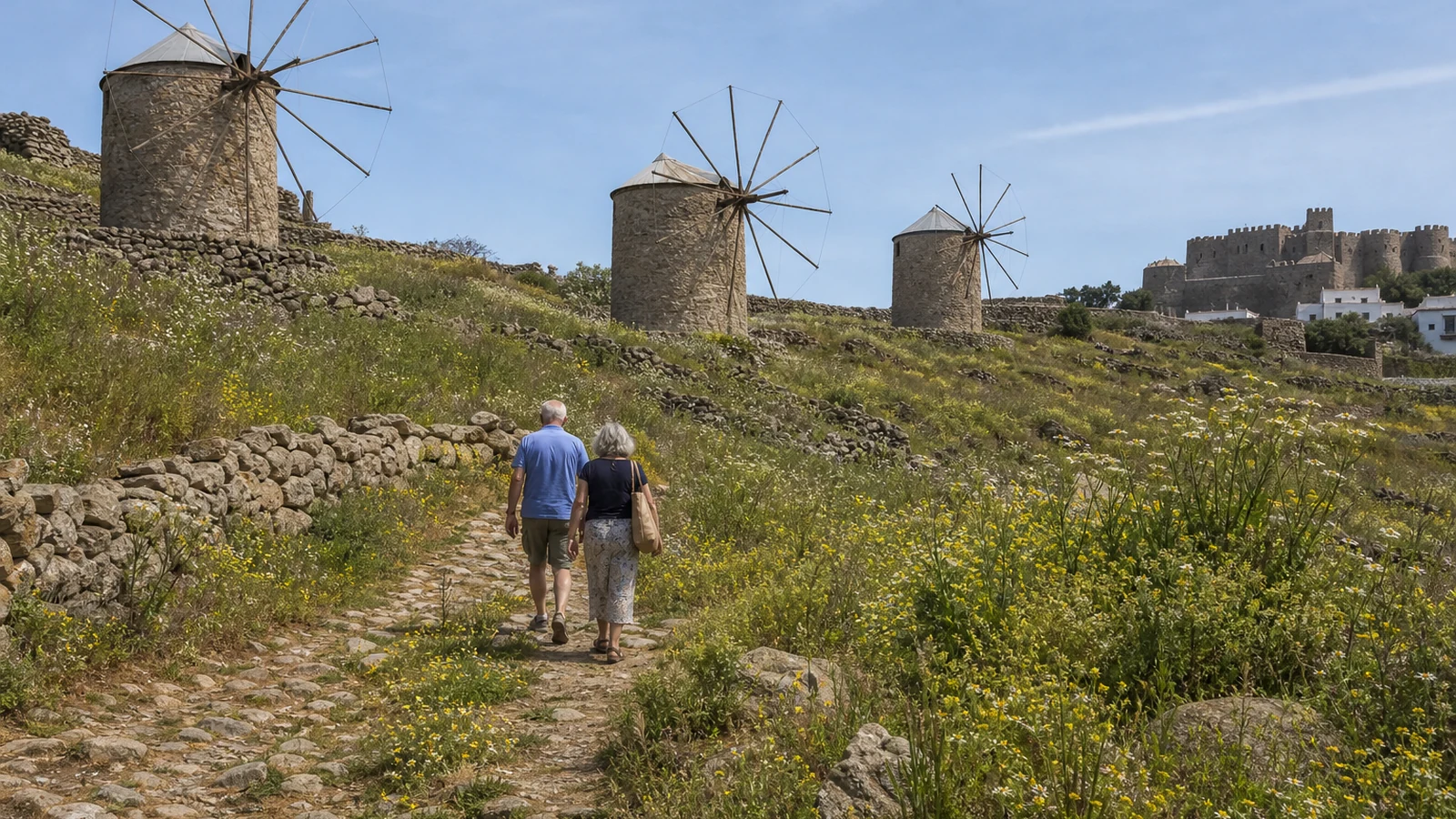
Patmos in late spring is not the bleached island seen in many August photographs. The hills still carry green and small flowers, and the old stone paths feel like part of the day rather than something to finish before breakfast.
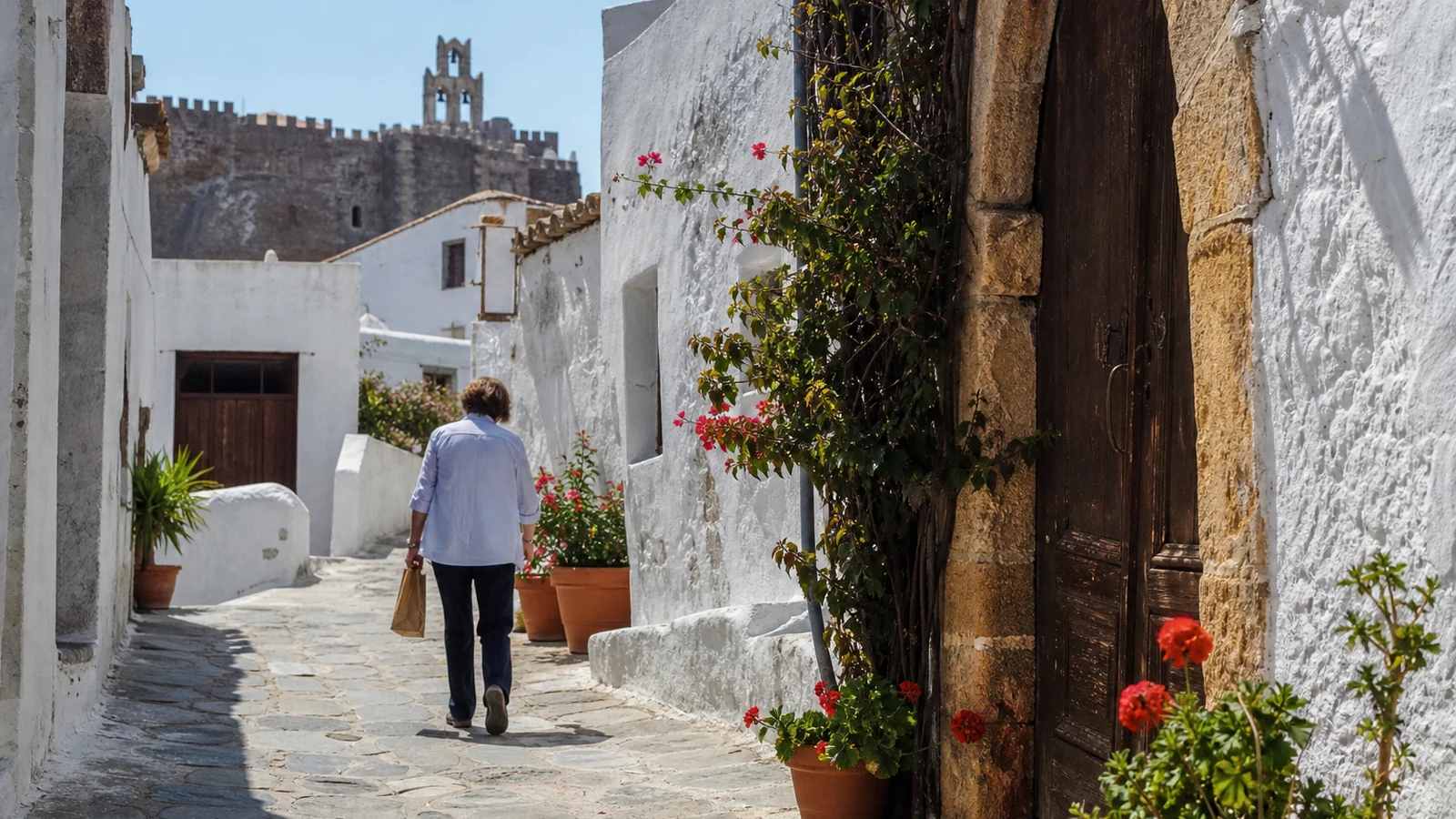
This is the better season for joining the island's parts together. Chora, the Cave of the Apocalypse and Skala make more sense when you can walk for a while without immediately searching for shade. Even then, the lanes are steep and exposed in places. Start earlier, carry water and do not mistake a breeze at the villa for a cool climb in the old town.
May needs a little caution. The island may be waking up for summer rather than already in full swing. A favourite beach taverna, boat outing or evening place should be checked for the week you are actually travelling. June is the safer middle ground: summer has arrived, yet the island usually has not reached its most compressed weeks.
Holy Week sometimes falls into this broad spring window, but it changes the whole purpose of the visit. Patmos draws worshippers and visitors for ceremonies centred on Chora and the Monastery of Saint John. Book around the actual Orthodox Easter calendar and leave space in the day rather than trying to fit the observances between sightseeing stops.
July and August for the Fullest Summer Rhythm
High summer is not a wrong time to visit Patmos. It is simply a more definite choice. Come then and you get the island at its most open: beach days, evening tables, day boats and the easy assumption that summer is what everybody has organised around.
You also get heat that changes the order of the day. Chora and the monastery belong in the morning. The afternoon belongs by the water or in the shade. Dinner starts later because there is little sense in rushing back uphill while the stone is still holding the sun.
The wind is part of the calculation too. A bright forecast does not promise a calm bay or a running small boat. Ask locally which side suits the day and keep one plan that does not depend on being at sea. This is more useful than deciding in advance that one beach is always sheltered.
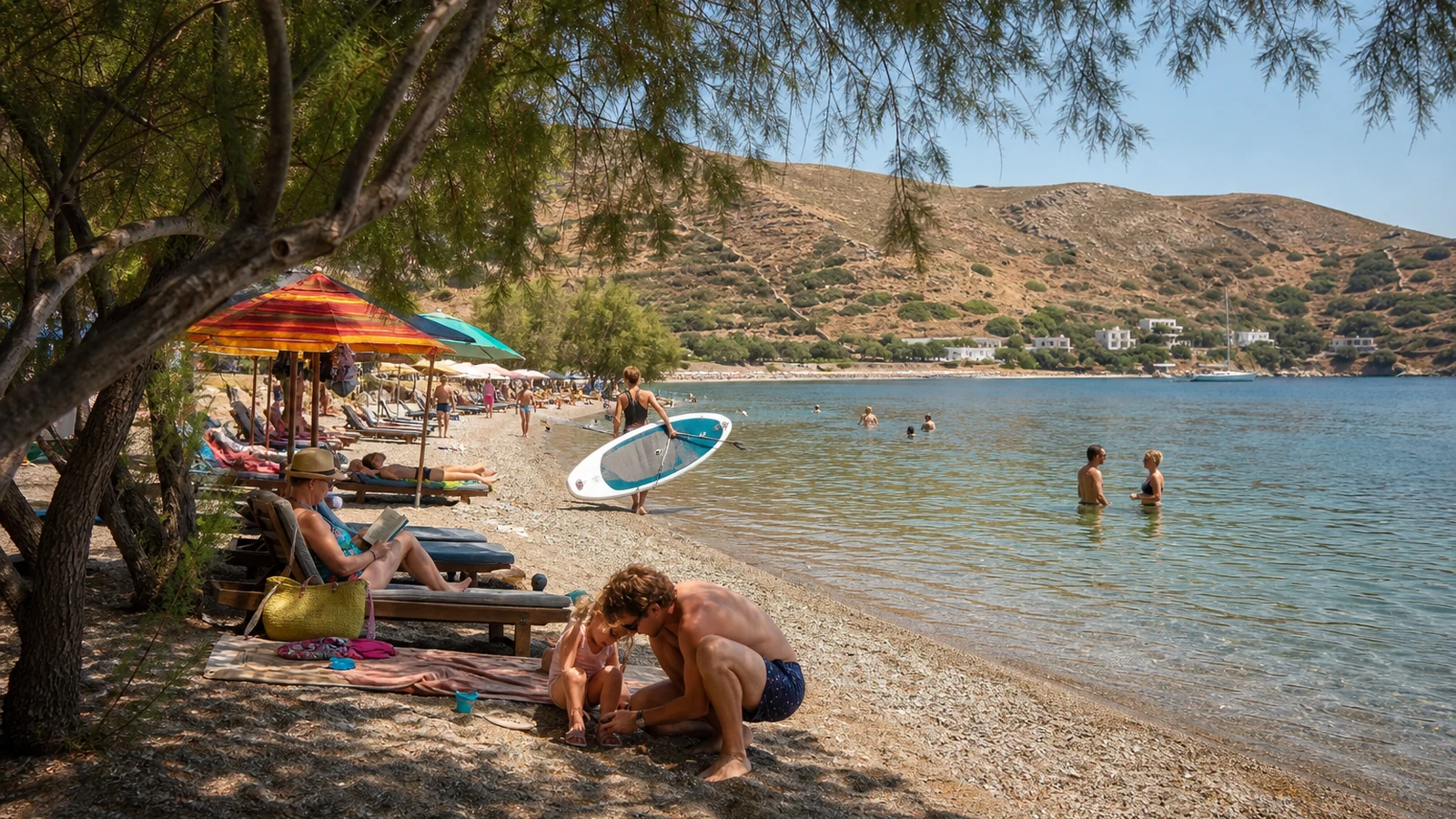
Kambos shows the sociable side of a Patmos summer: parasols, water sports, families and a long shallow edge. It is quite different from giving most of a day to Psili Ammos or choosing a small cove because the wind has turned. The island is compact, but the right beach can still change from one morning to the next.
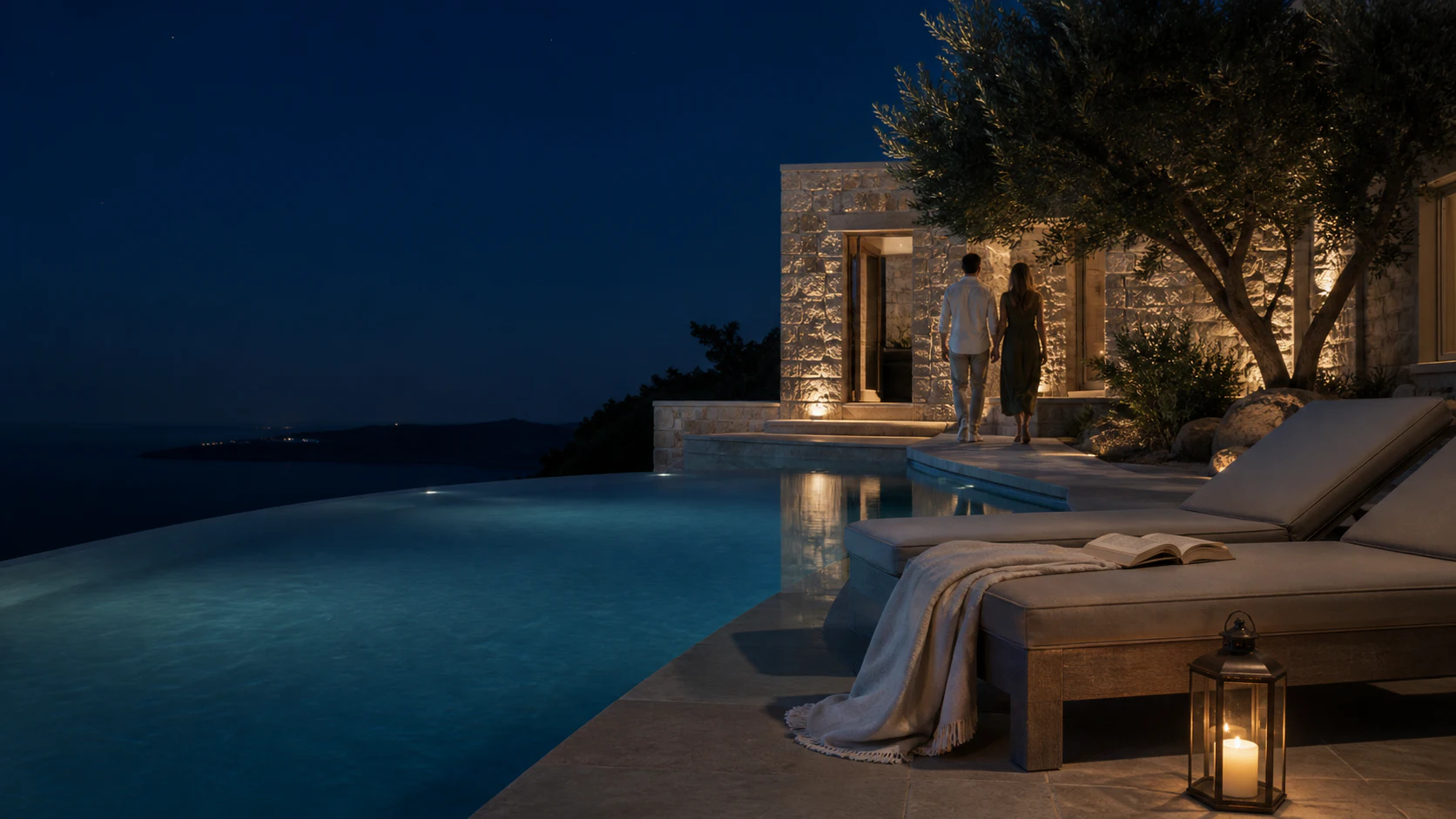
If you are staying in a remote villa, high summer also makes the exact house matter more. A private pool can turn the hottest hours into part of the holiday, but it does not make a long drive to dinner disappear. Check the last road, the nearest useful shop and who is happy to drive after dark.
September for the Best All-Round Balance
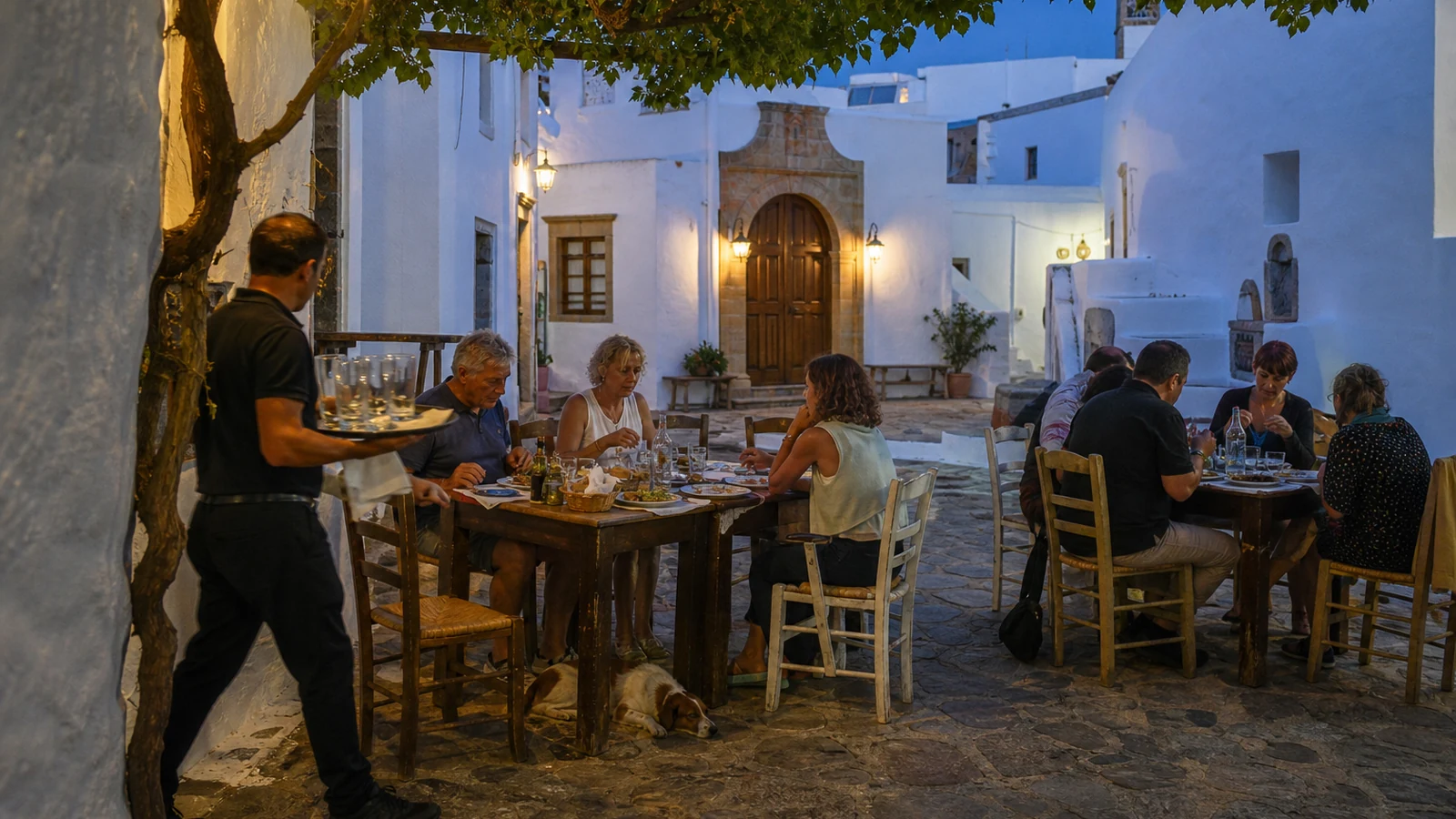
For most villa holidays, September is our first choice. The sea has had all summer to warm, the evenings are easier and the island still feels like a summer place rather than a destination closing its shutters behind you.
Early September is closer to August in atmosphere. Later in the month, things loosen. That can be exactly what you came for, but it is worth checking the one or two services that matter to your plans. Do not build the week around an old blog's promise that a boat, taverna or bus follows the same pattern every year.
September is particularly good if the group wants different things from Patmos. One person can walk the old route or spend longer in Chora, while somebody else still gets a real swimming holiday. You are not forced to choose between culture and the coast quite as sharply as you might in the hottest weeks.
The island's Religious Music Festival has traditionally brought performances to the setting near the Cave of the Apocalypse in early September. Treat any event date as live information, not a permanent fixture printed into the calendar. The reason to mention it is the character of the month: summer is still present, but the island begins to make room for another pace.
October and Winter Only with Flexibility
October can be lovely when the weather holds. It can also expose the weak part of a plan built from summer assumptions. Fewer services, shorter days and a rougher sea matter more on an island reached only by boat.
If swimming is essential, do not choose October because a temperature chart looks acceptable. The wind, the beach, the journey and the week's particular weather decide how much time you will actually spend in the water.
Winter Patmos is quieter still. It suits a traveller who wants the island as a lived place, accepts limited choice and can move plans around. It does not suit a first visit sold to the family as an ordinary Greek villa holiday. That is not a criticism of winter; it is the difference between visiting a place and buying the summer version of it.
Plan the Ferry Before Committing to the Month
Patmos has no airport. Most journeys finish with a ferry from Piraeus or from an island with an airport, such as Kos, Leros, Samos or Rhodes. Which route is sensible changes with the date, not just the month.
Check the operator's live timetable before booking flights, then check it again closer to travel. Leave real margin between a flight and a ferry. A same-day connection that works only if every part is punctual is not a relaxed beginning to a holiday.
Weather can alter or cancel sailings even outside winter. A current Blue Star Ferries notice in May 2026, for example, changed several routes because of bad weather. That does not mean May is unreliable. It means sea travel always needs a plan that respects the sea.
If the ferry arrives late, Skala is the easiest first-night logic. If the villa is farther away, confirm the handover and transfer rather than assuming island taxis wait for every arrival. Our guide to where to stay in Patmos explains how Skala, Chora, Grikos and the quieter areas change the daily pattern once you are there.
Our Simple Recommendation
Choose late May through June for walking, spring colour and an easier balance between Chora and the beaches. Choose September for the strongest all-round villa holiday, particularly when warm swimming and softer evenings matter. Choose July or August because you want high summer, not because it is the only time Greece works.
For Holy Week, let the religious calendar lead the trip. For October or winter, let flexibility lead it.
Then test the answer against the ferry and the exact villa pin. That final check is more useful than another climate table. Compare the current Patmos collection, and if two dates leave you choosing between a better connection and a better house, send us the dates so we can help narrow it down.