


Greece is steeped in history going back thousands of years. If you are interested in learning more and are planning to visit the country, you will want to know the best places to stay in Greece for history.
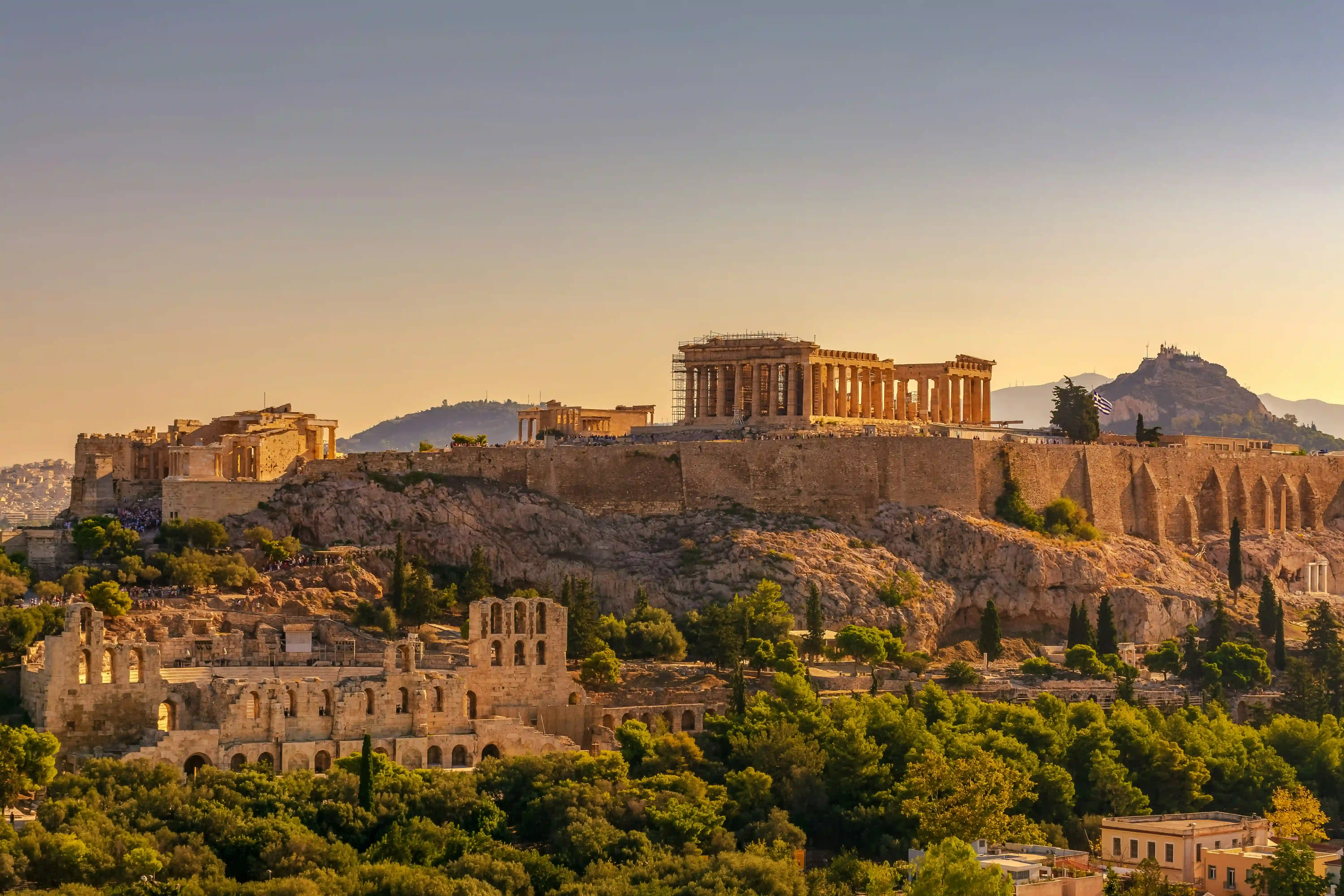
You may only have a short stay in Greece, so you need to choose wisely. Athens has significant ancient historical sites that have shaped how the world works today. The Ancient Agora fostered democracy, as people gathered there to discuss politics and vote on laws. The Acropolis has stunning architecture way ahead of its time, defining the power of the city. Crete was home to an advanced civilisation, the Minoans, who had a sophisticated plumbing system found nowhere else 4,000 years ago.
In this travel guide, we are going to look at Athens and five islands which we believe have the best historical sites to visit. Bnbstay has villas to rent across Greece, so once you have decided where you want to go, feel free to browse our collection.
Athens

There are other sites to visit in Athens, such as the Ancient Cemetery of Kerameikos, which was used from the 12th century BC until Roman times. There is a museum at the cemetery housing sculptures, vases, and figurines found on the site. The Temple of Hephaestus, god of the forge, is the best preserved Doric temple in Greece. The Temple of Olympian Zeus took 700 years to build and had 104 Corinthian columns, each measuring 23 feet (7 metres) tall. Only 17 remain.
The Ancient Agora was both the market and the meeting place. Here, scholars would debate and citizens would gather to vote.
Athens also has many museums, but if you only have time for one, visit the National Archaeological Museum, the largest in Greece, which houses more than 11,000 exhibits from prehistoric times to the 1st century AD.
Santorini

Many people go to Santorini for the beaches, the nightlife, and the beautiful sunsets over the caldera, but it is one of the best places to stay in Greece for history. The highlight is the ancient settlement of Akrotiri, dating to the early Bronze Age. Around 3,500 years ago, one of the volcanoes erupted and buried the city, similar to Pompeii in Italy. However, unlike Pompeii, the citizens managed to get out before it erupted, and therefore no bodies have been found. What remains is a well-preserved city with frescoes, furniture, and drainage systems. The site is enclosed in an air-conditioned structure, so you can visit it comfortably even in the heat of summer.
The capital of Santorini, Thera, was founded in the 9th century BC by the Dorians. Throughout the town, you will find ancient buildings, including the Agora, the Sanctuary of Artemis, the Royal Portico, the Temple of Apollo, the Terrace of Festivals, and a theatre.
Crete

Knossos was excavated in the early 20th century by Sir Arthur Evans, and what was found were intricate wall frescoes, advanced plumbing systems, and clay tablets with the earliest known writing systems in Europe. All this proved how advanced the Minoan civilisation was for its time. The Queen's Toilet in the palace is one of the earliest flushing toilets ever discovered, using running water from stone aqueducts. There are also drainage channels, proving that the Minoans reused bathwater for irrigation during drought.
Knossos is not the only Minoan Palace on Crete. On the south of the island is Phaistos Palace, the second largest Minoan palace, an important administrative and religious centre from 1900 to 1450 BC.
Close to Phaistos is Gortyna, the capital of Crete during the Roman occupation. The site is well-preserved and houses the Gortyn Code, carved into a stone wall in the Agora. It dates to the 5th century BC and covers laws relating to adultery, rape, marriage rights, divorce, inheritance, property rights, and the rights of slaves — giving us a remarkable insight into Cretan society of the time.
23 miles (37 km) to the east of Heraklion is Malia Palace, an important administrative and religious centre during the Minoan Bronze Age, famous for the find of the Minoan gold bee pendant. Bees were worshipped in ancient times, and honey is still an important part of the Cretan diet.
For more on planning a trip to Crete, read our guide to villa holidays in Crete.
Delos

The highlight is the Terrace of the Lions, a row of 7th-century marble lions erected to guard the Sacred Lake. What you see today are replicas, but the originals are housed in the Archaeological Museum, which also showcases statues, pottery, and artefacts found on Delos.
Other notable sites include two marketplaces, a 5,500-seat amphitheatre, a Minoan fountain, and the Sanctuary of the Foreign Gods — a collection of small temples including a temple to the Egyptian goddess Isis. The house of Dionysus, god of wine and festivity, has intricate mosaics including one of Dionysus riding a tiger.
While there, take the short walk up Mount Kynthos for panoramic views of the surrounding islands.
Rhodes

There are also signs of Ottoman rule in the Old Town. The Suleymaniye Mosque has a stunning pink facade and domes, and there are Turkish baths nearby.
Surrounding the town are fortified walls which you can walk along, stretching for 2.5 miles (4 km). For more on planning a trip, read our guide to villa holidays in Rhodes.
Corfu

Do not miss Angelokastro, a spectacular Byzantine fortress perched on a cliff. Not only does it give you an insight into Medieval history, but you also get stunning views.
In Corfu Town, take a look at the magnificent old and new fortresses built by the Venetians to protect the town from invaders.
Best Time to Visit Historic Sites in Greece
The best time to visit historic sites in Greece is during the shoulder seasons — May to June and September to October. This is particularly relevant for outdoor archaeological sites where you are out in the open. In spring and autumn, it is not too hot and the crowds are smaller than in summer. In July and August, if you do want to visit a site, go early in the morning, take a hat, and bring plenty of water. Museums can be visited at any time of year as they are air-conditioned in summer and warm in winter.
Where to Stay
Bnbstay has villas in Athens and on all these islands, apart from Delos — to visit Delos, you would stay on Mykonos. Whether you are a family, a group of friends, or a couple, you should not have a problem finding somewhere to suit. The villas offer luxury and have all the amenities you could wish for, including fully equipped kitchens and private pools.
How to Get Around
To get to many of the archaeological sites, you will need a car, especially if you are renting a villa. Most villas are off the beaten track, but the advantage they have over hotels is that they give you privacy, space, and freedom to do what you want when you want.
If you are visiting sites in Athens, park outside the city centre and use public transport and walking, as it is very difficult to park in the city.
FAQ
When is the best time to visit an archaeological site in Greece? Spring and autumn are the best times to visit archaeological sites in Greece, as it is not as hot or crowded as in summer. May, June, September, and October offer the best balance of comfortable temperatures and manageable crowds.
Do I need a car to visit archaeological sites in Greece? For most archaeological sites outside of Athens, yes. Sites like Knossos, Phaistos, and Akrotiri are not easily accessible by public transport. In Athens itself, it is best to park outside the centre and use the metro or walk between sites.
Which Greek island has the best history? Crete stands out for the sheer number and quality of its ancient sites — Knossos, Phaistos, Gortyna, and Malia are all within driving distance of each other. Santorini's Akrotiri is one of the most remarkable Bronze Age sites in the world. Rhodes Old Town offers a complete Medieval city. Delos, accessible by boat from Mykonos, is one of the most important archaeological sites in the entire Mediterranean.
Can you combine history with a villa holiday in Greece? Absolutely — and it is one of the best ways to experience Greece. Staying in a private villa gives you the flexibility to visit sites early in the morning before the crowds arrive, explore at your own pace, and return to your pool and terrace in the afternoon. Browse our Greece villas to find properties close to the sites that interest you most.
Is Athens worth visiting on a Greek villa holiday? Yes — Athens is one of the great historical cities of the world and is very manageable as a day trip or a short stay. If you are flying into Athens before heading to an island, even one full day at the Acropolis and the National Archaeological Museum is well worth it. Bnbstay has villas in Athens for those who want to stay in the city itself.
Planning a historical trip to Greece? Browse our Greece villas to find properties close to the best historical sites, or get in touch and our team will help you plan your stay.