For a villa holiday in Crete, choose the part of the island before the house. Harbour evenings in the west and outings around Heraklion make different weeks; trying to cover everything can leave too much of each day on the road.
Crete is a laid-back island with golden beaches, turquoise seas, towering mountains, spectacular gorges, and intriguing caves.
A house can suit families or groups of friends who want shared space and some meals at home. Compare the actual layout and location with your plans; a villa is not automatically a better choice than a hotel.
Use this guide to narrow the area, season and everyday arrangements. Then compare the exact property rather than relying on a general promise of luxury.
Why Choose a Villa Holiday in Crete
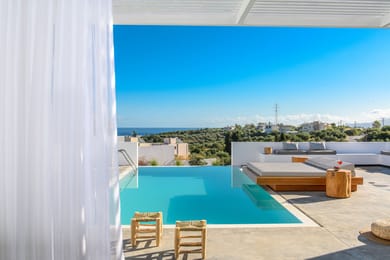
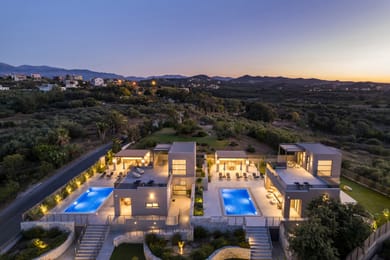
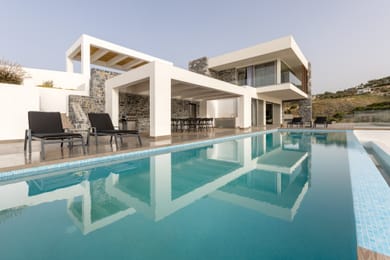
If a pool is important, browse the private-pool collection and confirm the destination, exclusive use and pool rules for the house you choose. Check the loungers and shaded seating against your group size.
Ask how close neighbouring buildings are and whether the terrace is overlooked. An entire house is not necessarily secluded, and a quiet village name does not settle questions about road or venue noise.
For meals at home, confirm the kitchen equipment, laundry and any barbecue you intend to use. A chef may be an option, but availability and charges need checking for the property and dates.
Compare the features that will affect your stay: cooling in the bedrooms, the sleeping arrangement and comfortable places to sit together. Do not assume every property has the same equipment or pool type.
Compare the whole cost for the same group and dates, including transport, meals and extras. Sharing a house may suit your budget, but it is not always cheaper than hotel rooms.
Holiday villas offer a 'slow living' experience. Take your time to enjoy breakfast, to sit on the terrace admiring the views, and to appreciate the quiet. Relish the Mediterranean indoor-outdoor way of life away from the hustle and bustle of a hotel.
A villa lets you organise much of the day around your own meals and outings. Check the house rules, pool hours and any noise restrictions before planning late evenings outside.
Choosing the Perfect Area for Your Crete Villa Holiday
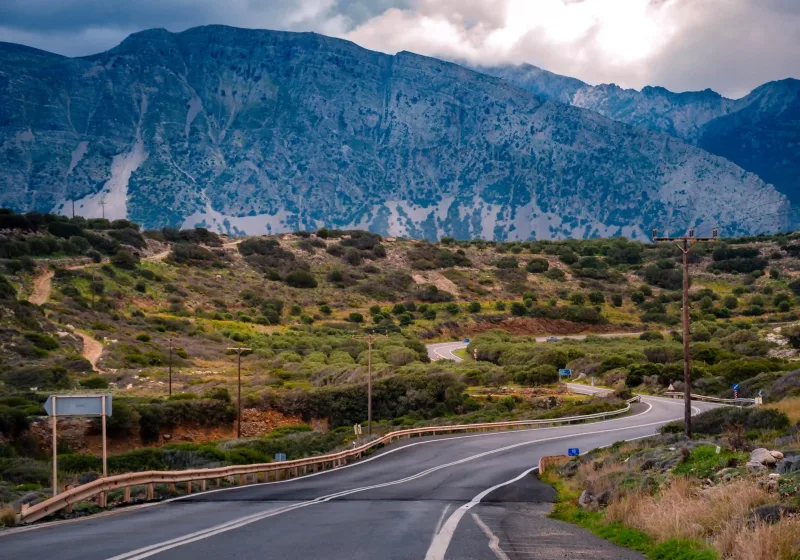
Crete has an extraordinary geographical diversity with both sub-tropical coastlines and imposing snow-covered mountains. There are three mountain ranges dividing the north coast from the south, with winding roads traversing them. To the west are the White Mountains (called Lefka Ori in Greek), in the middle is the Ida range, and to the east are the Dikti Mountains. There are more than 30 summits, the highest being Mount Ida, called Psiloritis, by the locals. It reaches a height of 2456 metres (8058 feet). In between are fertile plains and deep gorges, such as the well-hiked Samaria gorge, which is 16 km (about 10 miles) long.
While enjoying villa holidays, you may be interested in finding out more about the history of Crete. The cities along the North coast are a compelling blend of ancient Minoan history, Venetian rule, and the influence of the Ottomans. Heraklion, the capital of the island, is close to the Minoan palaces of Knossos and has the superb Heraklion Archaeological Museum.
Both Venetian and Ottoman history are prevalent in Rethymno, with its beautiful Old Town and the Fortezza Castle.
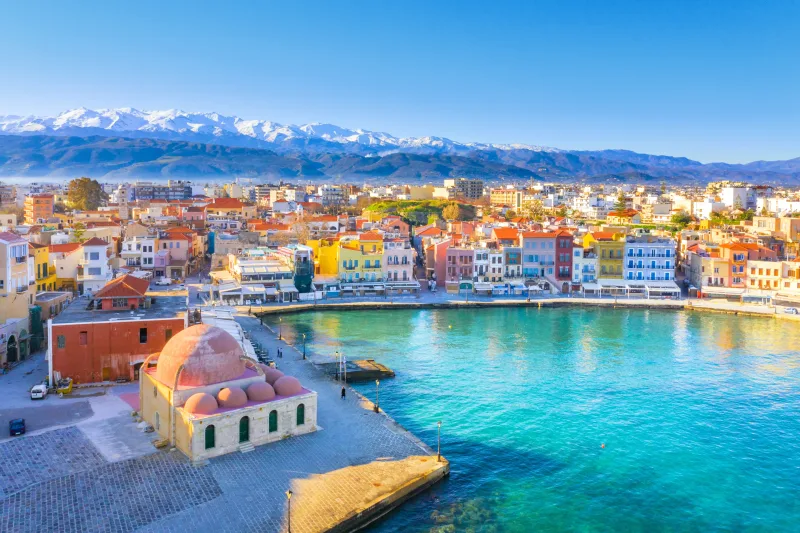
Chania, previously the capital of Crete and located to the west of the island, offers a stunning Venetian harbour, a long maritime history, and adjacency to World War II sites. For a full comparison, read our Chania vs Rethymno guide.
Crete villa holidays offer the opportunity to be flexible when dining. You can cook for yourself, hire a private chef, or visit a local taverna. Head to a taverna outside the resorts for an authentic experience. The gastronomy of the island is reason alone to visit, and the Chania area is particularly known as a foodie destination. Tradition merges with modern touches to produce delicious food made with fresh, local, and seasonal ingredients. The Mediterranean diet prevails, with freshly caught seafood, vegetables and fruit, herbs, nuts, and olive oil used in abundance. Try the roast lamb or Stifado, a slow-cooked stew with beef, rabbit, pork, or lamb, cooked with shallots, red wine, tomatoes, and herbs. Moussaka is the traditional dish of Greece, and it is served in many tavernas on the island. Grilled calamari (squid) and prawn saganaki are popular, and vegetarians should try boureki made with courgettes, potatoes, mizithra cheese, and herbs, and dakos, which is a barley rusk, topped with olive oil, chopped tomatoes, olives, and feta cheese.
When is the Best Time for a Crete Villa Holiday?
Peak season (July and August). At this time of the year, the island is alive and vibrant. However, it is very busy as it is the school holidays in the Northern hemisphere. It is also very hot, averaging between 28°C and the mid 30s, which can be a problem for some. Compare current quotes early if your dates and bedroom needs are fixed; there is no universal one-year booking deadline.
Shoulder season (May to June and September to October). Consider these months if you want to mix beach time with sightseeing. Compare your dates and part of Crete: a spring mountain outing and an autumn coastal stay need different plans. Check forecasts and opening dates, and compare actual villa and flight quotes rather than assuming every shoulder-season week costs less.
Winter in Crete. Choose a town base if museums, food and everyday city life matter more than beach facilities. Confirm transport and attraction opening dates before booking; seasonal services may be limited. Greece’s official climate guidance distinguishes coastal conditions from colder mountain weather, so do not use a single island-wide temperature range to plan every outing.
Read our full guide on the best time to visit Crete for more detail
Essential Planning Tips for Your Crete Villa Holiday
- If your dates or bedroom requirements are fixed, start comparing suitable Crete villas early. Check the actual quote and cancellation terms before committing; a fixed number of months in advance does not guarantee a particular villa or a better price.
- Compare current flights to Chania and Heraklion for your departure airport and dates. If considering a ferry from Piraeus, check the operator’s current route, arrival port and sailing. Include connections and the onward transfer rather than relying on a fixed summer timetable.
- Map the exact property against the beach, groceries and evening meals. Compare current bus services with a hire car or quoted transfers, including the last journey home. A short distance on a map may still be an awkward walk.
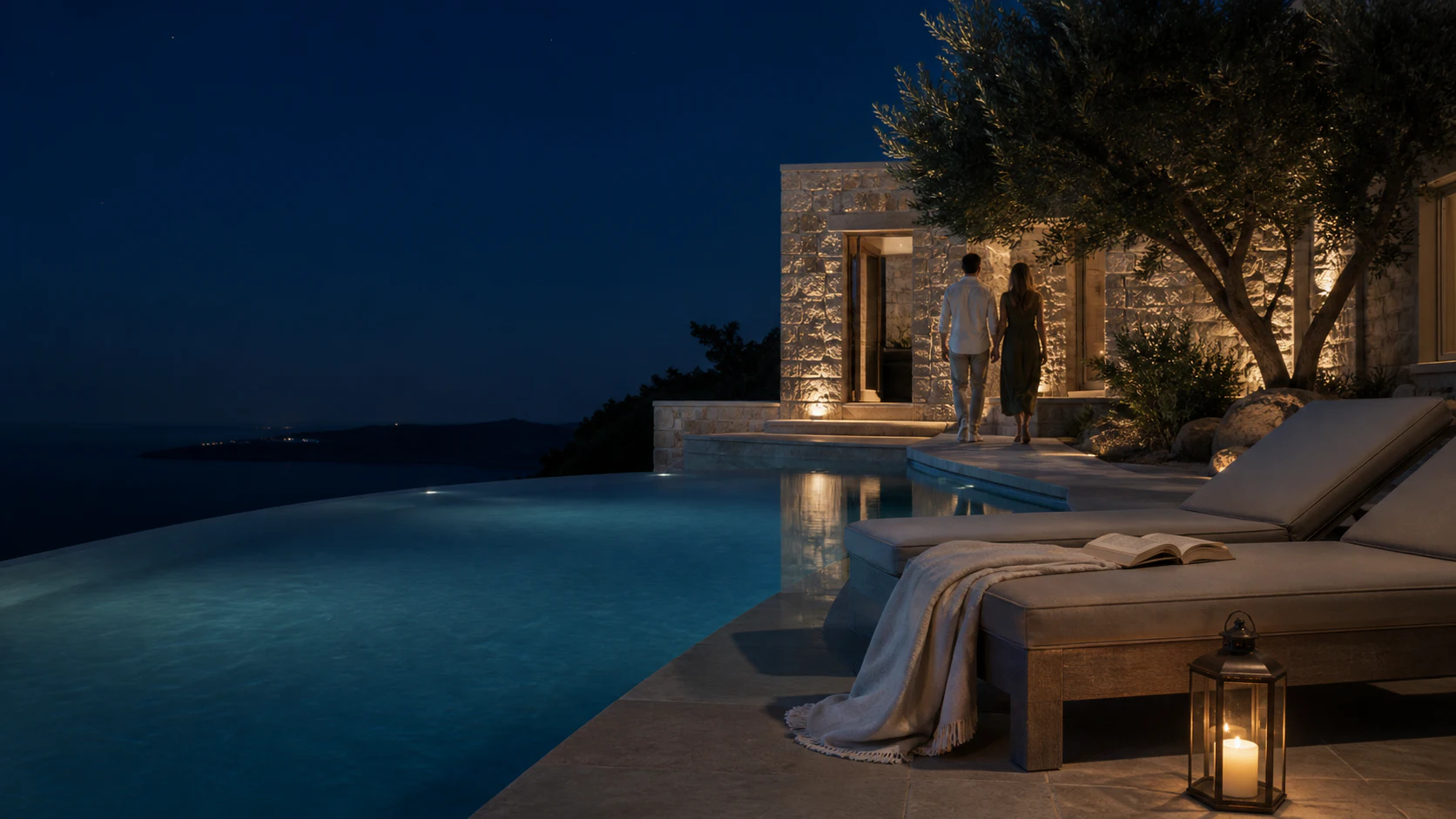
- There are many amenities to look for when booking villas in Crete. Air conditioning is important; in fact, it is crucial in the summer months. Ask for the applicable accommodation registration or licence details. AADE describes the registration framework for short-term rentals; do not assume every accommodation category uses the same licence. An infinity pool is a great amenity because it gives the illusion that the water is merging with the landscape.
- Try markets and local shops as well as supermarkets. Ask where produce comes from and buy what suits the meals you want to cook; neither freshness nor lower prices follows automatically from the shop type.
- Confirm who handles arrival and how to contact them during your stay. Ask whether help with restaurants, car hire or tours is available and what it costs, rather than assuming a concierge service is included.
Curating the Experience: Food, Culture & Activities
Gastronomy Crete is well-known for its excellent Mediterranean gastronomy. Hire a private chef for your Crete villa rental. He or she will cook gourmet Cretan and Greek dishes. However, don't miss the opportunity of going to an authentic Cretan taverna. Not only will you taste delicious food and wine, but you will experience the local atmosphere. Many tavernas will have live traditional Cretan music on the weekends.
Experiences If you want a museum, winery or olive-oil visit, check the organiser, opening dates and transport. Ask your host whether they can help with arrangements. You can even take a mythological tour in Chania. Being an island, there are also boat tours on offer, such as to the old leper colony on the island of Spinalonga, near Elounda in the east of the island, and another around Thodorou island from Chania, a sanctuary for the Cretan goat, the Kri Kri.